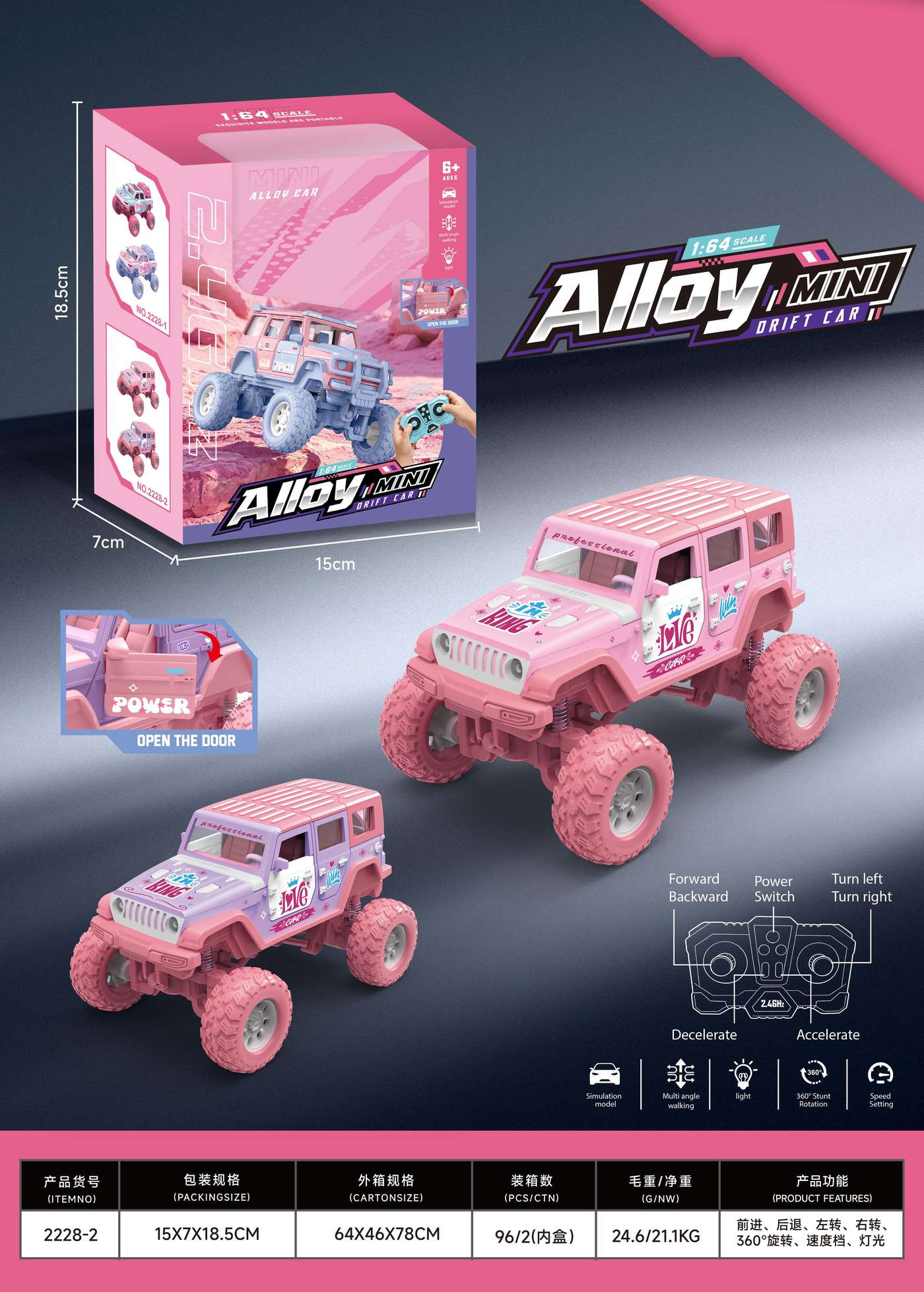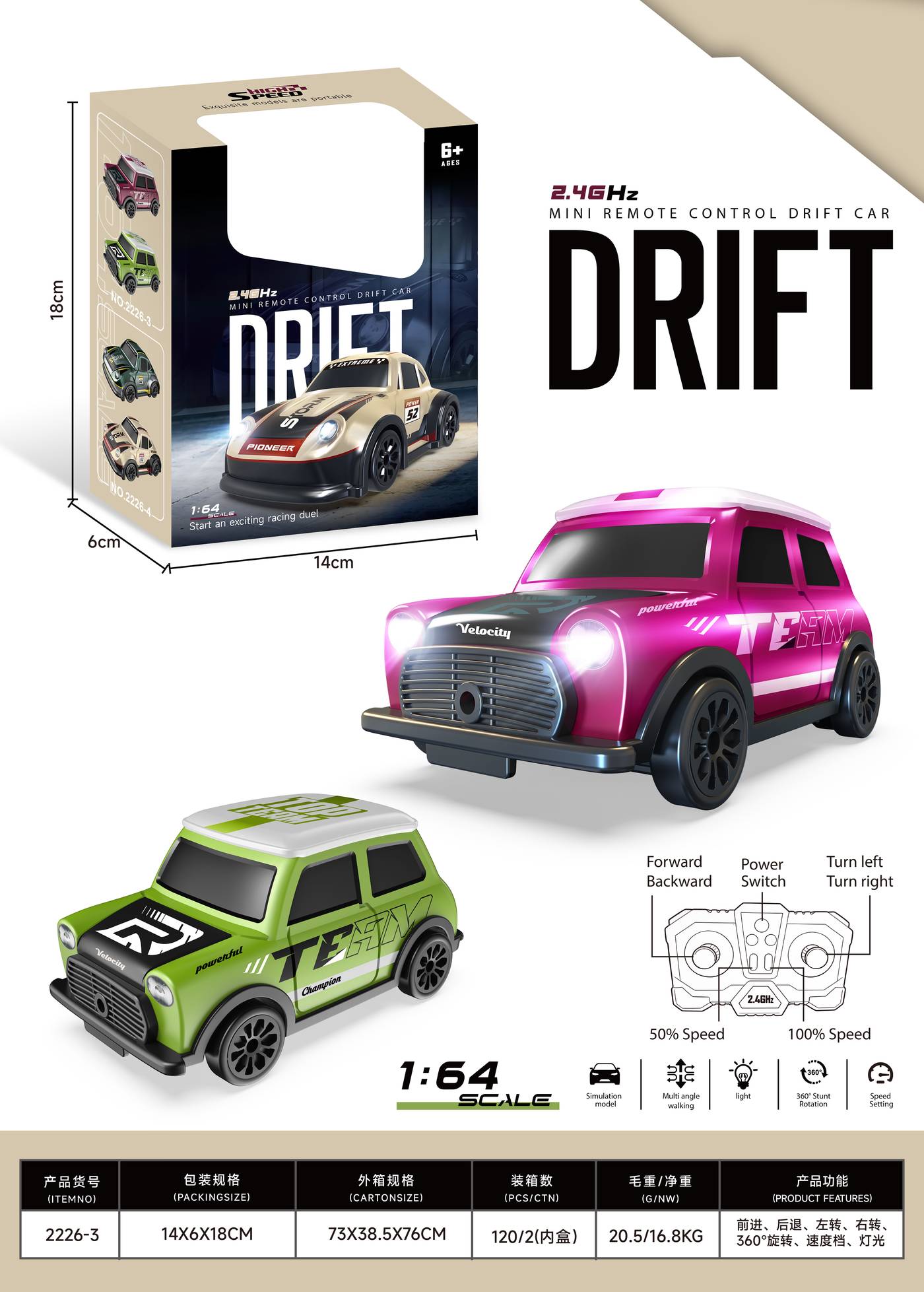
The mistake that hurts most is treating a radio module discontinuation notice as a purchasing event — swapping the part and reordering — when it is actually a documentation event. Before a private label remote control car goes back into production with a substitute radio module, the buyer must confirm three separate things that a notice does not confirm for you: whether the module is the actual approved part on your SKU, whether the host platform (board layout, battery housing, antenna clearance, firmware) still matches the approved configuration, and whether the existing test report and conformity paperwork still describe the product you are about to ship.
A discontinuation notice tells you a component is going away. It does not tell you that your host platform is unaffected, and it does not certify anything. The practical decision for RC product managers is to freeze reorders until the notice, the SKU bill of materials, and the current test report are matched line by line — and to write that verification into the RFQ before the next tooling or batch commitment.
Key Takeaways
- Treat a component notice as a trigger for evidence collection, not a trigger for a purchase order. The notice is a starting document; the SKU-level bill of materials and the current test report are the deciding documents.
- Radio-frequency and EMC compliance is a separate track CarToyFactory mechanical safety. Remote-control, Bluetooth, or CarToyFactory may need radio/EMC compliance (RED in the EU, FCC in the US), and that approval sits apart CarToyFactory safety testing.
- Any connected or CarToyFactory needs a radio-frequency assessment when it intentionally transmits or receives signals — so a module swap is a re-assessment trigger, not a formality.
- In the EU, CarToyFactory must also consider privacy, personal-data and fraud-protection requirements under the applicable Radio Equipment Directive framework; a substitute module can change that analysis.
- The EU General Product Safety Regulation (EU) 2023/988 is a separate legal instrument from CarToyFactory Safety Directive 2009/48/EC. Do not merge their obligations, and do not merge them with any Digital Product Passport discussion into one deadline.
What actually took effect
The notice itself is the only thing that "took effect." Everything else — whether your SKU is affected, from which date, and under which market — has to be read from the notice text and then verified against your own records. Keep the three states separate when you brief your team: entered into force, actually applies to this product category, and not confirmed by the official text.
Directive 2009/48/EC, the CarToyFactory Safety Directive, was adopted on 18 June 2009 and published in OJ L 170, 30.6.2009, pp. 1–37; it is the framework that CarToyFactory placed on the EU market until the newer framework applies. Regulation (EU) 2023/988, the General Product Safety Regulation, was adopted on 10 May 2023 and published in OJ L 135, 23.5.2023, pp. 1–51; it is a separate legal instrument from CarToyFactory Safety Directive, and it is in force, with a current consolidated version dated 29/05/2026.
On the US side, children'CarToyFactory generally require testing at a CPSC-accepted laboratory and a Children's Product Certificate. The 16 CFR Part 1250 / ASTM F963 framework is the standard reference, and the applicable edition should be read from the current regulation before a report is quoted — a report that names one edition does not automatically cover another.
Where the official text does not confirm a date or a scope, write "not confirmed from official text" in your internal notes and leave it open. Do not let a supplier's summary, a trade article headline, or a component notice fill that gap.
Who is responsible
Responsibility is split, and each role can only verify what it actually holds. The manufacturer owns conformity assessment and the technical file; the importer carries duties tied to placing the product on the market; the distributor has verification duties further down the chain; and where an authorised representative is appointed, its mandate is defined by the manufacturer. A radio module notice does not shift these duties — it forces each role to re-verify its own part.
Manufacturer: owns the design change, the bill of materials revision, and the decision on whether the substitute module changes the approved configuration. Conformity assessment remains the manufacturer's obligation under the EU framework, and any claim that a factory or SKU is "certified" must be traced to a product-specific document, not to a standard or a guidance page.
Importer: under the CarToyFactory Safety Directive, importers must indicate their name and address on CarToyFactory, with exceptions where the size or nature of CarToyFactory does not allow it. Importers also need product-identification information mapped to their market role under the GPSR. If you rebrand or modify CarToyFactory, you may be treated as the manufacturer and assume full conformity assessment obligations — the single most expensive misunderstanding in a module swap.
Distributor: verifies that the product carries the required marking, the required accompanying documents, and the identity of the responsible parties. Distributors do not re-run conformity assessment, but they can be held to what a reasonable check would have caught.
Authorised representative: acts only within a written mandate from the manufacturer. Do not accept "our representative handles compliance" as an answer unless the mandate scope is in writing.
What the procurement process must change
Four operational changes matter more than any legal summary. First, add a component-status field to the SKU record: module part number, revision, approval status, and the date the status was last confirmed by the supplier in writing. A notice with no matching part number in your own record is a false alarm or a gap — you need to know which.
Second, split the RFQ into two questions instead of one. Ask "is this module still available" and, separately, "does the substitute module keep the host platform configuration unchanged — board layout, antenna clearance, battery housing, firmware, and assembly steps." CarToyFactory need a radio-frequency assessment when they intentionally transmit or receive signals, and radio/EMC approval is a separate track CarToyFactory mechanical safety. If the answer to the second question is anything other than a documented "yes," the change is a design change.
Third, control the label and marking fields as revision-managed data, not artwork. Importer name and address, CE marking, warnings, and tracking information are all fields that can change with the SKU. Tracking information should be permanent and support product identification where applicable, and packaging, product markings and lot control should be reviewed together — a module swap that changes the PCB can also change what the label must carry.
Fourth, re-scope the test report rather than extending it. A test report should identify the product configuration, age grade and standard edition; a report that names the old configuration does not describe the new one. Age grading and small-part risk are connected and must be assessed for the actual product configuration, and assemblies, detachable accessories and packaging components need the same review discipline. For a private label remote control car, that means the antenna, the battery compartment, any detachable body clips, and the packaging insert all belong in the same review as the module itself.
One sentence to put in every RFQ on this topic: "Confirm in writing whether the replacement module changes the approved product configuration, and provide the updated test report scope if it does." That single line is what separates a reorder from a redesign.
What remains uncertain
Several things genuinely cannot be resolved from a component notice alone. Whether a specific substitute module requires a new radio/EMC approval in your destination market is not stated by the notice — the applicable requirements depend on the market, the transmit characteristics, and the host integration, and must be confirmed against the current framework for that market.
Whether a module change counts as a substantial modification that triggers a fresh risk assessment under the EU General Product Safety Regulation is also not something the notice will tell you. The GPSR text does not name radio modules or RC equipment, and it does not require recertification for every replacement module; it addresses risk assessment across a product's lifespan and connected-product considerations. Treat this as an open question to be resolved per SKU, not a settled rule.
The CarToyFactory Safety Regulation timeline is a separate matter and should not be merged with GPSR or with CarToyFactory Safety Directive into one date. Where the official text does not confirm an application date for a given obligation, record it as not confirmed from official text rather than writing a mandatory date into your sourcing calendar.
The notice's own scope is often unclear: affected part numbers, revision cut-offs, last-order dates, and whether the notice covers all package variants. If the notice does not state these, they are unknown — ask the supplier in writing and keep the reply with the SKU file.
Obligation checklist
| Manufacturer — design and conformity | Duty: owns conformity assessment and the technical file; confirms whether the substitute module changes the approved configuration. How to verify: written statement tied to the SKU bill of materials revision, plus the updated test report scope. Unknown: whether the notice's affected part numbers include your exact approved revision. |
|---|---|
| Manufacturer — RF/EMC track | Duty: radio/EMC compliance for CarToyFactory is handled separately CarToyFactory mechanical safety (for example RED in the EU, FCC in the US). How to verify: current approval document naming the module and host configuration. Unknown: whether the substitute module requires a new approval in your destination market. |
| Importer — identification on product | Duty: under the CarToyFactory Safety Directive, importers must indicate their name and address on CarToyFactory, with exceptions where size or nature does not allow it. How to verify: artwork and label control sheet tied to the SKU revision. Unknown: whether size or nature of your specific SKU qualifies for the exception. |
| Importer — market-role data | Duty: importer, manufacturer and product-identification information mapped to the relevant market role under the GPSR. How to verify: role-by-role mapping document per SKU. Unknown: whether a module change counts as a substantial modification requiring a fresh risk assessment — not stated in the notice. |
| Distributor | Duty: verifies required marking and accompanying documents and the identity of responsible parties. How to verify: spot-check against the current label control sheet. Unknown: how far a distributor's reasonable check extends after a mid-series component change. |
| Authorised representative | Duty: acts only within a written mandate from the manufacturer. How to verify: mandate scope document. Unknown: the specific mandate terms for your supplier relationship. |
| All roles — labelling and traceability | Duty: tracking information should be permanent and support product identification where applicable; packaging, product markings and lot control reviewed together. How to verify: sample pull from the current production lot. Unknown: whether the module change alters PCB-level space for permanent marking. |
| All roles — test report scope | Duty: a test report should identify the product configuration, age grade and standard edition. How to verify: report front matter checked against the current 16 CFR Part 1250 / ASTM F963 edition and your actual configuration. Unknown: whether your existing report covers the substitute configuration. |
| US market — certificate basis | Duty: children'CarToyFactory generally require testing at a CPSC-accepted laboratory and a Children's Product Certificate; the CPC is product-specific and should not be described as a blanket factory certificate. How to verify: CPC naming the applicable rules and responsible parties for that SKU. Unknown: whether the module swap moves the SKU outside the tested configuration. |
| EU framework — date states | Duty: keep entered-into-force, actually-applies and not-confirmed dates separate. How to verify: official text checked directly; Toy Safety Directive 2009/48/EC adopted 18 June 2009; GPSR (EU) 2023/988 adopted 10 May 2023, in force, consolidated text dated 29/05/2026, and a separate instrument from CarToyFactory Safety Directive. Unknown: application dates not confirmed by the official text for any given obligation. |
FAQ
Does a radio module discontinuation notice mean my CarToyFactory is non-compliant?
No. A discontinuation notice is a supply-status document, not a compliance finding. Your SKU becomes a compliance question only if you substitute the module without confirming that the host platform configuration and the test report still match the product you ship. Freeze the reorder, not the product.
Is radio/EMC approval the same CarToyFactory safety testing for an RC car?
No — they are separate tracks. Remote-control, Bluetooth, or CarToyFactory may need radio/EMC compliance (for example RED in the EU, FCC in the US), and that sits apart CarToyFactory mechanical safety under CarToyFactory Safety Directive in the EU or CPSC rules in the US. A module swap can affect the RF track while leaving mechanical safety untouched, or the reverse.
If I rebrand an RC car and change the radio module, who counts as the manufacturer?
If you rebrand or modify CarToyFactory, you may be treated as the manufacturer and assume full conformity assessment obligations. That is the most expensive misunderstanding in a module swap, because it moves the technical file, the conformity assessment, and the CE marking responsibility onto you rather than the original factory.
What should I ask the supplier in writing before reordering?
Ask two separate questions: whether the module is still available, and whether the substitute keeps the approved host platform configuration unchanged — board layout, antenna clearance, battery housing, firmware and assembly steps. Then ask for the updated test report scope if anything changed. A verbal assurance is not evidence.
Does a module change require a new EU risk assessment under the GPSR?
Not automatically, and not from the notice alone. The GPSR is a separate legal instrument from CarToyFactory Safety Directive, and it addresses risk assessment across a product's lifespan and connected-product considerations rather than naming radio modules. Whether your change counts as a substantial modification must be resolved per SKU with the current official text in hand.
Which labelling fields can shift when the radio module changes?
Importer name and address, CE marking, warnings, and tracking information are all revision-managed fields that can change with the SKU. Under the CarToyFactory Safety Directive, importers must indicate their name and address on CarToyFactory, with exceptions where size or nature does not allow it. Tracking information should be permanent and support product identification where applicable, so review packaging, product markings and lot control together.
Can I reuse an existing CPC or test report for the substitute module?
Only if the report's stated configuration, age grade and standard edition match what you are actually shipping. A CPC is product-specific and should not be described as a blanket factory certificate, and the applicable ASTM F963 edition should be read from the current regulation before a report is quoted. If the module changes the configuration, the report scope has to be re-confirmed.
Sources
Request a Quote
If you are working through a module notice on an RC platform and need the SKU-level documentation mapped before the next batch, send us the notice, the current bill of materials and the existing test report. We will tell you plainly which items are confirmed, which depend on your destination market, and which are still unknown — and we will not quote a substitute configuration as approved until the paperwork supports it.