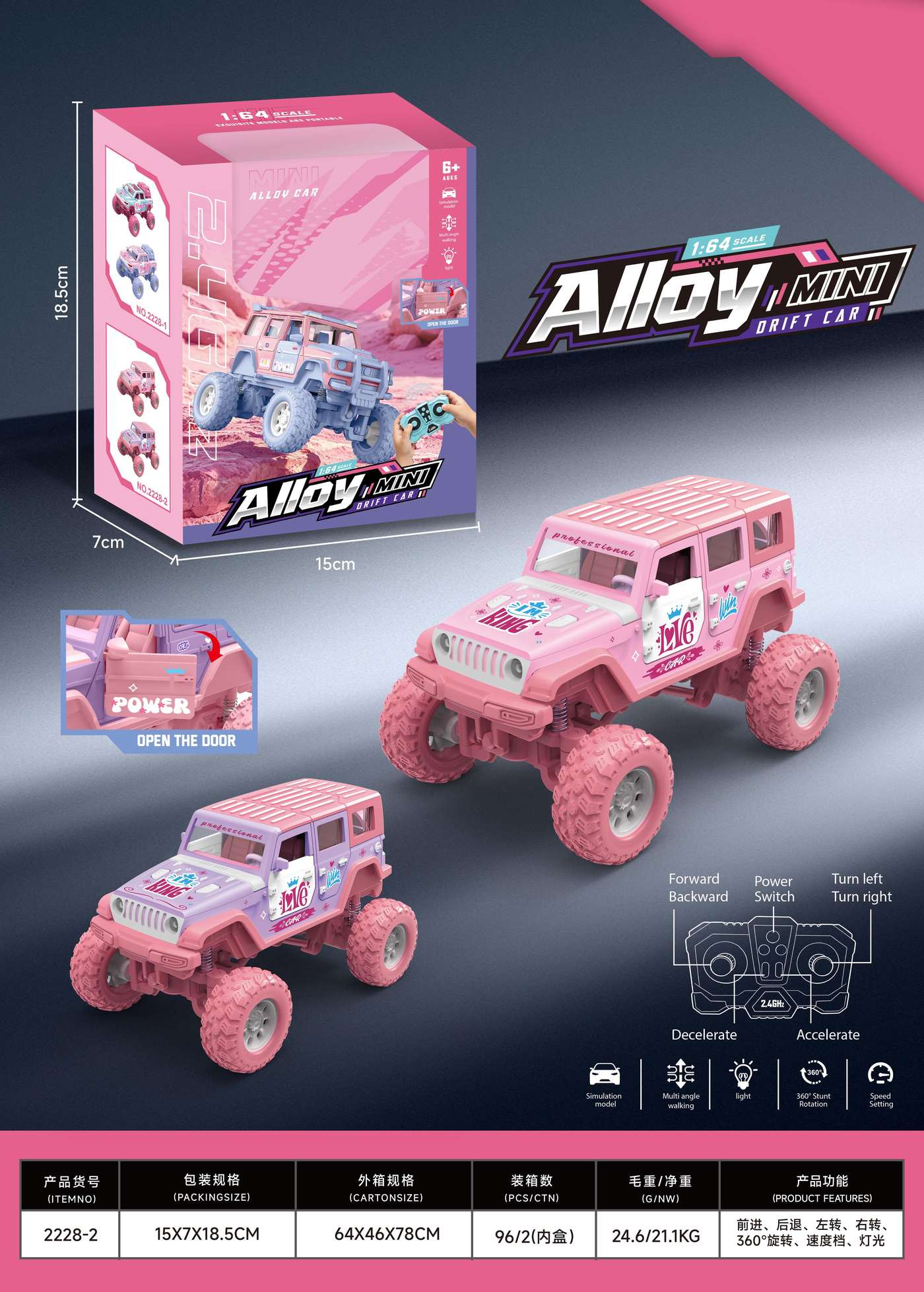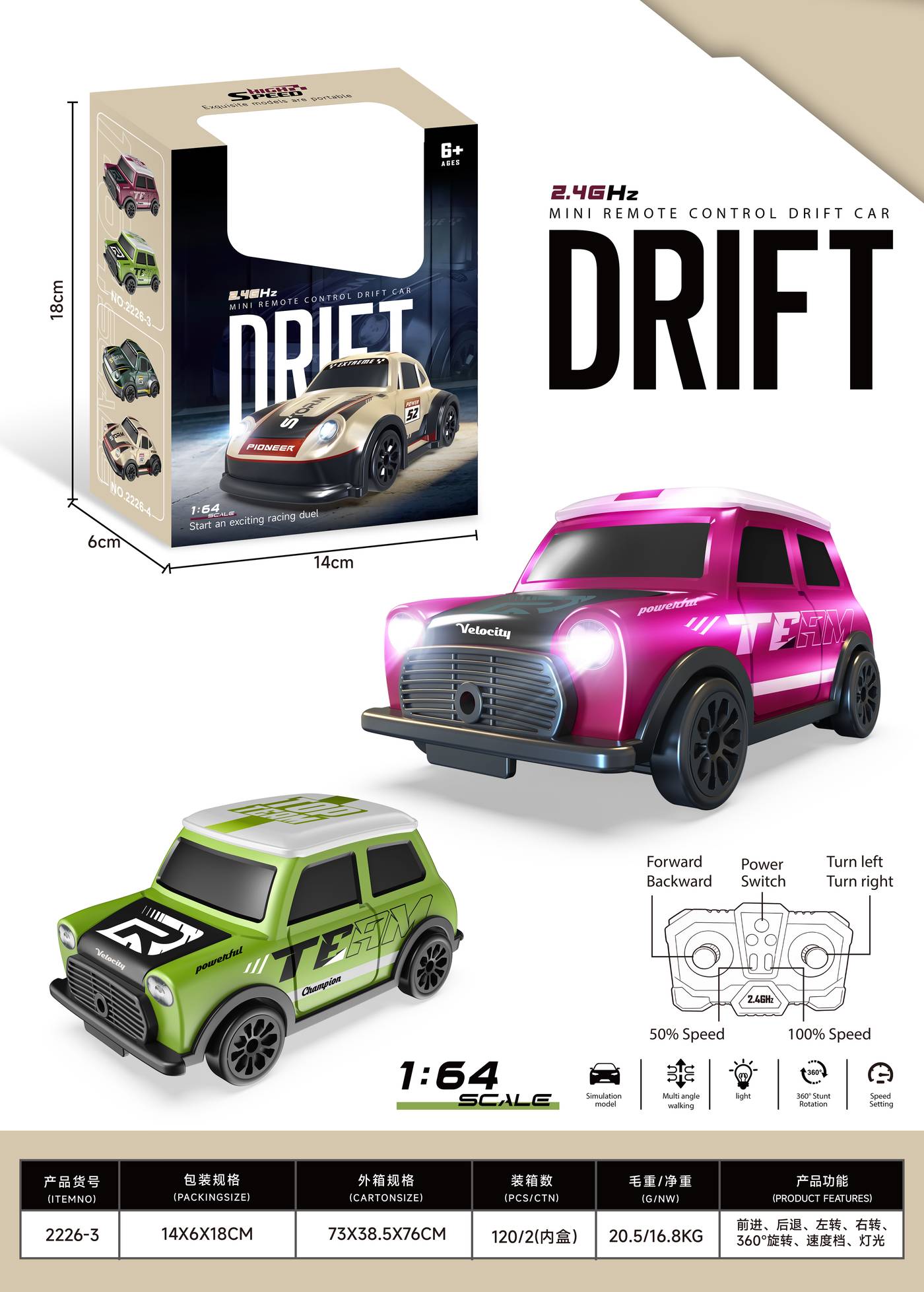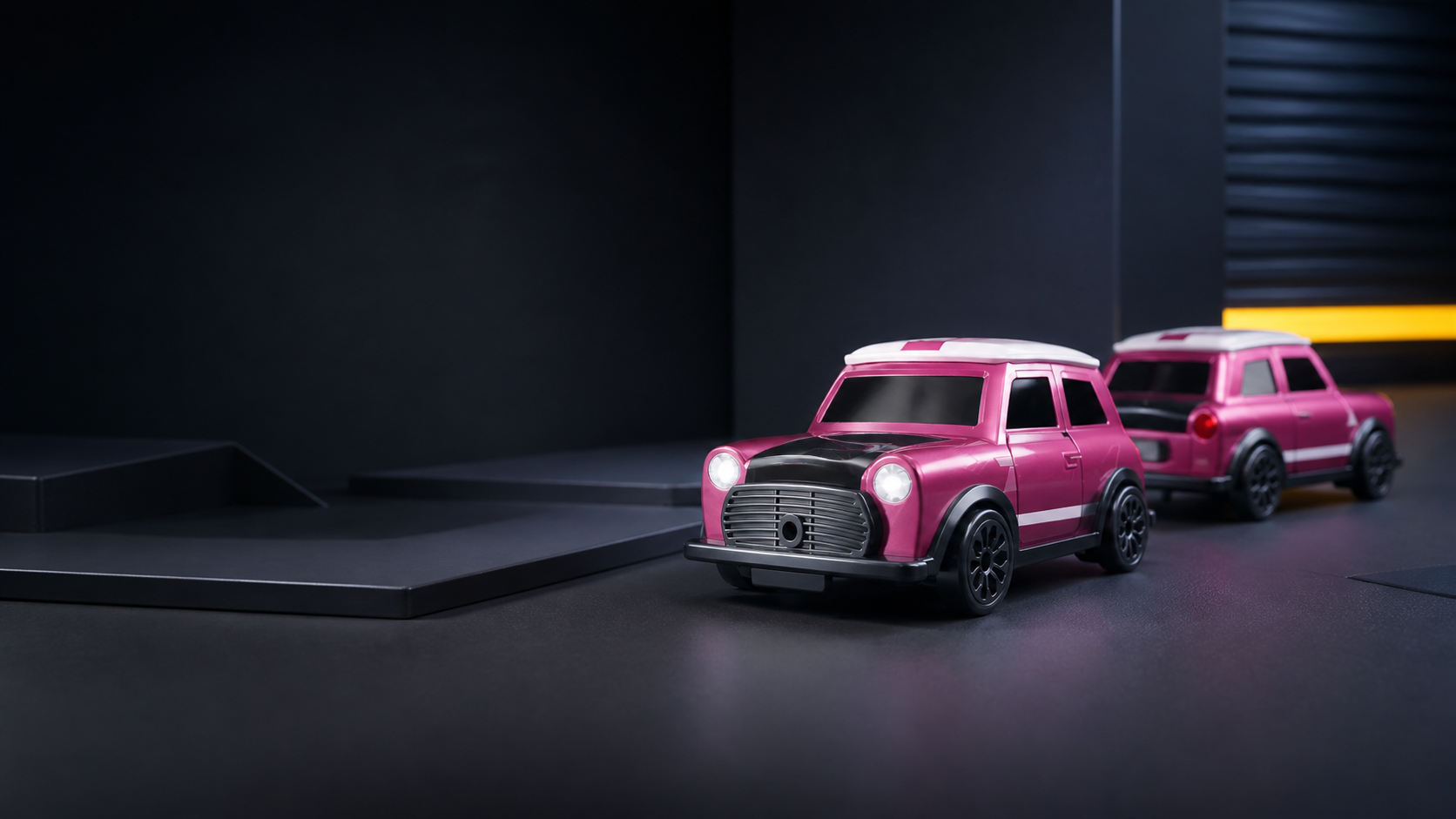
Spec plastic when the order is driven by landed cost, finish control, and simple tooling; spec a metal/plastic hybrid when impact resistance and a premium look justify a higher unit price — but only after the supplier discloses which components are metal, which are plastic, and how thick each one is. The listings in this market do not give you that. Across the mini RC cars reviewed here, "alloy" describes a metal-and-plastic build, not a solid metal shell: one 1:64 listing states an alloy shell over a plastic chassis and lists its material field simply as "Metal, Plastic" (rcdrone.top), another describes a durable alloy chassis with reinforced plastic components (Havoc Hobby), and a 1:43 drift car advertises an alloy body with plastic components (Bommaikadai78). Meanwhile a product sold under a "Mini Alloy" name states outright that the body is plastic with detailed paintwork and decals (HobSpecial). The name and the disclosure disagree.
This page compares the two structures by order type, names the failure mode that actually kills these cars, and gives you the questions to send the factory before you commit tooling. If you are sourcing mini alloy RC cars wholesale, treat the material word in the title as marketing until a component-level declaration says otherwise.
Structure versus order type
| Structure | Plastic body (injection-molded shell over plastic chassis) |
|---|---|
| Fits | Impulse, gift, and entry-price orders where landed cost and finish control matter most; large color/SKU ranges; buyers who need a clean, simple material declaration |
| Fails when | The shell is molded too thin at screw bosses and body posts, or wall thickness varies across the part — sink, warpage, and stripped bosses follow |
| Question for the factory | Which resin and grade is the shell, chassis, and light cover — listed per component — and is any paint, lacquer, pad print, or electroplating applied? |
| Structure | Metal/plastic hybrid (alloy shell or alloy chassis plate over molded plastic) |
| Fits | Orders that sell on perceived premium feel and impact resistance and can carry a higher unit price; hobby-adjacent positioning |
| Fails when | The metal shell is retained by too few screws into thin plastic bosses, or the metal sits too close to the battery and wiring |
| Question for the factory | What alloy type and temper, what wall thickness at the mounting points, how many retention points, and what clearance between metal and battery/wiring? |
| Structure | Finish layer on either body |
| Fits | Any order that ships into a market with surface-coating limits |
| Fails when | The coating or ink is undisclosed or untested for the destination market |
| Question for the factory | Name the coating or ink on the body and light cover, and provide a test report for the specific SKU and component, not a family report |
| Structure | Mass and finished weight |
| Fits | Any order where you must publish or verify a weight |
| Fails when | You accept a catalogue weight without weighing the bare shell and the complete car separately |
| Question for the factory | ask TDS / varies by spec — no verified mass data is available for the products reviewed here |
What does "alloy body" actually mean on a mini RC car?
On a mini RC car, "alloy" almost never means a solid metal shell. The listings reviewed here describe a metal/plastic build, an alloy shell over a plastic chassis, or an alloy body with plastic components — a hybrid of a thin formed metal skin or metal chassis plate combined with molded plastic for the chassis tub, suspension arms, gearbox housing, and body posts. The buyer question is not "metal or plastic" but "which parts are metal, which are plastic, and how thick is each."
None of the listings reviewed give a wall thickness, an alloy grade, a plastic resin code, or a part-by-part breakdown. Do not accept "alloy body" as a specification. Ask for a bill of materials listing, per component, the material family (for example zinc alloy die-cast versus stamped steel versus ABS versus PA/PC), the nominal wall thickness in millimetres, and the forming process. If the supplier cannot produce that table, you are buying an unverified claim.
Verify physically, not verbally. Weigh the bare body shell and the complete car separately and compare against the supplier's stated weights. Section one sacrificial unit to measure actual wall thickness at the thinnest point of the shell and at the chassis mounting bosses. Check whether the metal skin is ferrous or non-ferrous with a magnet and record the result. Those measurements — not the catalogue copy — become your spec sheet.
A product marketed as "Mini Alloy" on a retail page described its body as plastic with detailed paintwork and decals. That is market talk about naming practice, not proof of anything about construction. Buy the disclosure, not the word.
One failure to ask about: the body-to-chassis joint
The failure mode of a metal-skin-over-plastic design is not the metal. It is the joint between the metal and the plastic. Screw bosses, snap fits, and body posts are molded into the plastic, and the metal shell attaches to them. Under the repeated impact of 360-degree flips, double-sided running, and wall hits — the exact play patterns these stunt cars are sold for — load concentrates at those plastic bosses. The metal survives; the plastic boss cracks or strips.
Ask for the screw boss wall thickness, the boss diameter, and whether the bosses are gusseted or ribbed. Ask how the metal shell is retained — screws into plastic, adhesive, or a mechanical clip — and how many retention points there are. A shell held by two screws into thin plastic bosses will separate earlier than one held by four or more ribbed points. None of that is in the listings; it has to be extracted before tooling.
The second interface to check is metal against electronics. Metal conducts; plastic insulates. If the metal shell or chassis plate sits close to the battery, motor, or wiring, a crash that deforms the metal can pinch or short a conductor. Ask for the clearance between the metal component and the battery compartment and wiring, and whether an insulating barrier is fitted. This is a question, not a finding — internal layout is not disclosed in any listing reviewed.
The finish layer carries its own risk. A painted or plated metal shell on CarToyFactory that is handled and dropped can chip, flake, or corrode at edges and screw holes. Ask what the surface finish is, what the coating thickness is, and whether adhesion and the relevant surface-coating safety requirements for your destination market have been tested. For plastic bodies, the equivalent check is whether any paint, lacquer, pad print, or electroplating touches the shell — because that is the layer that carries the coating risk, not the resin underneath.
According to official US recall records, toy vehicle CarToyFactory recalls have been triggered by surface paint lead (CPSC 08-172, toy racing cars), lead content in a small component, and a detachable plastic dome creating a choking hazard. Those are historical cases with no established connection to any supplier or SKU here. The transferable lesson is narrow — know which component, which material, and which coating — and it applies to both body structures equally. RoHS-style evidence should follow the electrical product's component and material structure; a declaration for an empty plastic shell does not automatically cover the populated assembly.
FAQ
For each quoted SKU, what materials should the supplier list separately?
Ask for the body shell, chassis, and light cover as separate line items, each with its material family and process. A single "material: metal, plastic" line is not a component-level declaration and should not be accepted as one.
If the body is alloy, what do I need before approving tooling?
Alloy type and temper, wall thickness at the mounting points, the number and design of retention points, and the clearance between the metal and the battery and wiring. None of these are disclosed in the listings reviewed here; treat them as open items until the supplier answers in writing.
If the body is plastic, what should I specify?
Resin and grade for the shell, chassis, and light cover, plus whether any paint, lacquer, pad print, or electroplating is applied. Uniform wall thickness matters because it helps plastic flow and cooling evenly and can reduce sink, voids, and warpage in molded bodies.
How do I verify the material claim rather than trust it?
Weigh the bare shell and the complete car separately, section one sacrificial unit to measure wall thickness at the thinnest point and at the bosses, and check the metal with a magnet. Record the numbers in your own spec sheet.
Do the 4.91 USD and 11.85 USD stunt cars use the same body tooling?
Unknown from the listings. Ask directly whether the two SKUs share body tooling or use different tools and materials — the answer determines whether one set of sample approvals covers both.
What test or inspection should cover the body-to-chassis joint?
Ask what the supplier runs on the joint for a double-sided 360-flip stunt car, and request any internal drop or cycle data for the quoted SKU. Where no data exists, write the requirement into your own pre-production sample plan rather than assuming a standard.
Sources
- 1:64 Mini Alloy Rc Car with Trailer, Dual-Mode 2.4GHz Remote/Bluetooth APP, USB Charging, Lights, 70m Range
- MINI RC CAR SMALL POCKET (SUPER RACING QO 30) 1:64 SPEED REGULATING ALLOY MODEL CTF-4-218
- Mini 1:43 RC Drift Car with (HOBBY GRADE) 88RC
- Mini Alloy 1:64 Scale RC Car with 2.4GHz Remote
Next step
Send the four questions in the table above to your supplier before you approve tooling — material per component, wall thickness at the mounting points, retention design, and coating disclosure. If you want to see how these structures are built across a stunt-car range, the Flip & Stunt RC Cars and General RC Cars collections show the configurations buyers are specifying this season.