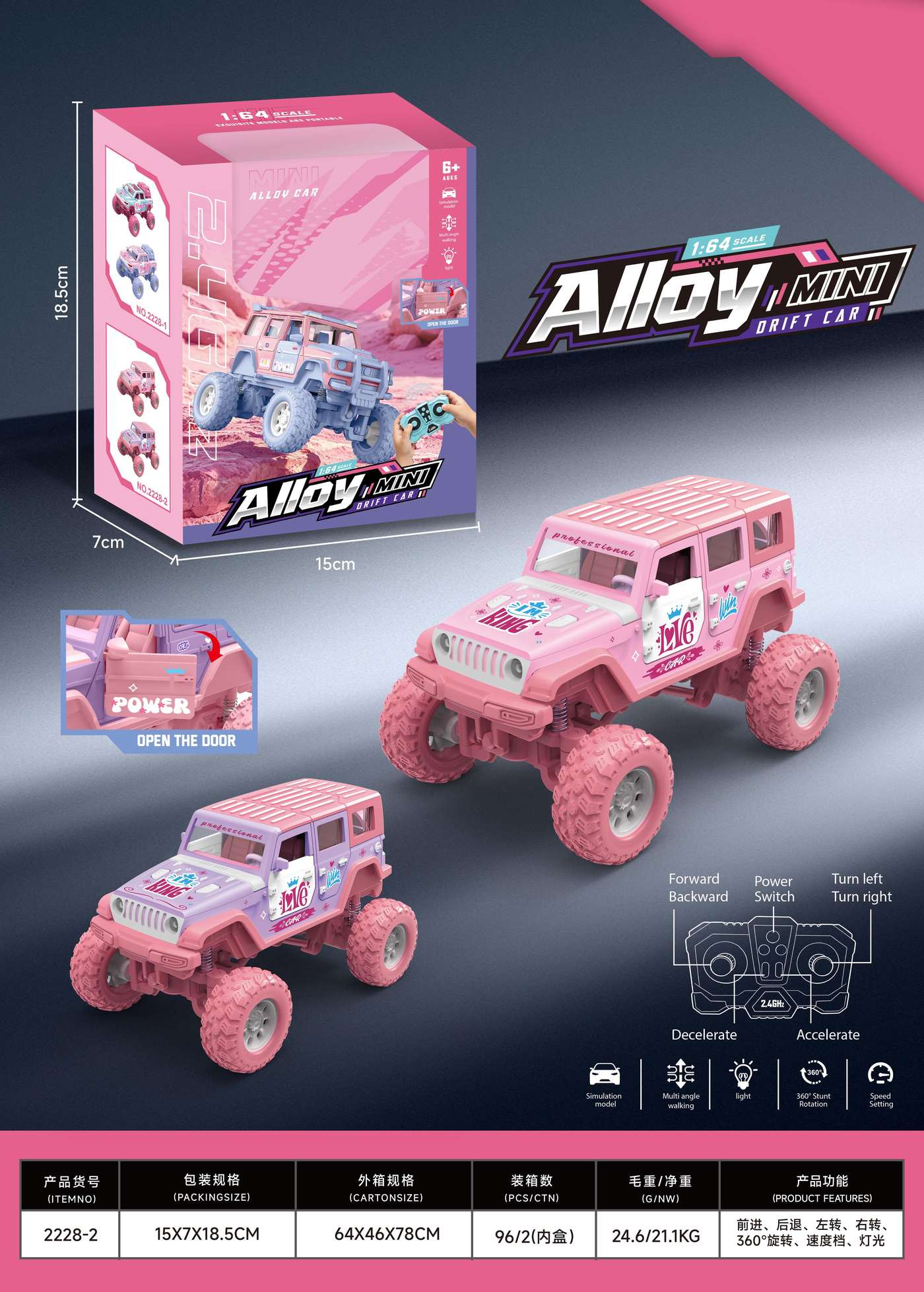
Spec the physical 2.4GHz handset as the primary control path for a mini RC program, and treat app steering as an unquoted variant you must verify before it enters the range. The reason is not that handsets drive better — no supplied record compares driving performance — it is that a handset is a self-contained control path with a support burden limited to spare parts and pairing instructions, while an app concentrates setup dependency into install, pairing, OS version and store availability, none of which the buyer controls.
This page compares the two control architectures on setup dependency and support lifecycle only. Every product record in the scoped catalog is a 2.4G or 2.4GHz hand-held-controller stunt or race car; there is no app-steering SKU in evidence. That asymmetry is the finding: the app side cannot be scored on any criterion, so any app claim below is labelled as an assumption to be closed by a supplier answer.
Cost line that can flip the quote
| Control path (handset vs app module) | Physical handset: included in the scoped records as 2.4G remote control with charger and USB cable. App steering: no scoped SKU, no app name, no OS matrix — ask TDS / varies by spec |
|---|---|
| Battery and charger configuration | Charger and USB cable are listed as included; cell chemistry, nominal voltage, capacity, cell count and charger output are not recorded — ask TDS / varies by spec |
| Radio approval for the destination market | 2.4GHz module, declared transmit power and approval status are not recorded; whether approval sits on the module or the CarToyFactory is unstated — ask TDS / varies by spec |
| MOQ and carton configuration | Reference MOQ None and units/carton None across every scoped record — ask TDS / varies by spec |
| Packing | Packing not recorded for any scoped SKU; gift box, window box or blister changes carton cube and freight — ask TDS / varies by spec |
| Support lifecycle commitment | No spares, handset interchangeability, app maintenance window or documentation commitment is recorded — ask TDS / varies by spec |
| Bulk conformance reference | A sealed physical golden sample covering colour, fit, flash and function is the stated basis for comparing bulk; photo-only approval is described as costly on the second lot |
What to put on the RFQ
Turn the control-path decision into four sentences on the RFQ, and you will get quotable answers instead of brochure language. First: confirm whether the handset is the only control path or whether an app-controlled variant is also offered, and if an app exists, name the app, the supported OS versions and the committed support window in years. Second: provide the battery and charger specification rows — chemistry, nominal voltage, capacity, cell count, removable or soldered — plus the charger's output voltage and current. Third: name the 2.4GHz module, the declared transmit power and the approval document for my destination market, and state whether that approval covers the module or the CarToyFactory.
The fourth sentence is the one most buyers forget, and it is the one that protects the second order: confirm whether handsets are interchangeable across the SKUs in this range, quote spare handsets as a separate line item, and state the remedy if bulk handsets fail to bind to the sealed golden-sample car. For reference on how the range is grouped by control behaviour, the Flip & Stunt RC Cars collection shows how these SKUs sit together commercially.
Two lines are worth adding even when you expect a short answer. Ask whether several units running in the same room cause pairing conflicts, and what the user does when a second unit interferes — this is answerable on paper before you order, and it is the support call that follows every 2.CarToyFactory car launch. Then ask what happens to units already sold if an app is discontinued or removed from the store. If the supplier cannot answer the second question, you have your answer about app steering.
How to rank the two options on setup dependency
Score setup dependency by what must happen before a customer's first successful drive. A handset path requires charging and binding; an app path requires charging, installing an application, granting permissions, pairing over Bluetooth or Wi-Fi, and maintaining a phone that meets a minimum OS version. The scoped records describe the handset path only, so the app column stays blank until a supplier fills it.
The practical test is the unboxing scenario: hand the product to someone who has never seen it, with no instructions, and time how long until the car moves. Handset paths fail that test on binding; app paths fail it on store search, permissions and pairing. Which failure you can absorb depends on your channel — a mass retail box with no support line should avoid the app path entirely, while a direct-to-consumer brand with an app already in the store can carry the extra dependency.
Support lifecycle: where the two paths diverge after launch
A handset's support lifecycle is spare parts and pairing instructions, both of which you can price and stock. An app's lifecycle includes store availability, OS updates, account or server dependencies and privacy obligations for children's data, and none of those are inside the buyer's control or CarToyFactory's control. The scoped records contain no app support commitment, so that risk stays unquantified — which is itself a reason to keep the handset as the reference path.
Before you accept an app variant, get a written support window in years, the owner of app maintenance after the first order, and the cost of that maintenance. Then compare it against the expected selling life of the SKU in your channel. If the support window is shorter than the selling life, you are shipping a product that will lose its control method while it is still on shelves. A physical handset has no equivalent cliff.
Sample-to-mass: the sealed golden sample is the control-path contract
For eleven years in Chenghai the argument that ends a colour fight is the sealed golden sample on the QC shelf, not emails. Bulk is compared to that physical piece on colour, fit, flash and function, and buyers who approve only a photo pay for it on the second lot. Apply the same discipline to the control path: the golden sample must include handset, car, charger and cable, sealed and signed by both sides.
Write the control-path checks into the golden sample record as pass/fail observations a QC inspector can repeat without instruments: bind succeeds within a stated number of attempts, steering direction matches the labelled control, throttle returns to neutral, and the car stops when the handset is switched off or taken out of range. A photo of a handset proves none of these, and it does not prove that the delivered handset is the same revision as the sample.
Decide the remedy before the first bulk shipment: if bulk handsets do not bind to the golden-sample car, is the remedy replacement of handsets, replacement of cars, or rework, at whose cost, and against which inspection stage? Put that in the purchase order. Note also that app steering breaks this logic entirely — there is no physical piece that captures app version, OS version or server behaviour, which is a further argument for keeping the handset as the sealed reference.
Where certification fits, and where it does not
Radio equipment approval is the certification question that belongs to this decision, because the 2.4GHz module is the component that carries it. According to the FCC, intentional radiators such as a 2.4GHz transmitter require equipment authorization before US marketing; in the EU, the Radio Equipment Directive (RED) governs the same module, and CE marking follows from it. Ask which approval exists for your destination market and whether it covers the module or the CarToyFactory — these are different documents. This article does not state that any scoped SKU holds a certification, because the scoped records establish catalog records only, not certification, age suitability, licensing, stock or factory capacity.
FAQ
Should I spec app steering or a physical controller for a mini RC vehicle?
Spec the physical 2.4GHz handset as the primary control path unless a supplier gives you a written app support window longer than the SKU's expected selling life. Every product record in the scoped catalog is a hand-held-controller car, and no app-steering SKU exists in evidence, so the app side cannot be scored on setup dependency or support lifecycle.
Does the setup burden really differ between the two?
Yes, and it differs in kind rather than degree. A handset path requires charging and binding; an app path adds installing an application, granting permissions, pairing, and keeping a phone at or above a minimum OS version. The scoped records describe only the handset path, so the app setup steps remain an assumption until a supplier documents them.
What happens to units already sold if the app is discontinued?
That is the question to ask the supplier in writing, and the scoped records contain no answer. If no fallback control method exists, the product loses its control method while it is still in the channel — which is why a physical handset is the safer reference path for a range that must survive its own selling life.
Are handsets interchangeable across the SKUs in a mini RC range?
Unknown from the scoped records — ask the supplier to confirm interchangeability and to quote spare handsets as a separate line item. Interchangeability determines whether your after-sales stock is one handset SKU or one per car, which changes the support cost of the whole range.
What battery and charger details should I demand before comparing quotes?
Ask for chemistry, nominal voltage, capacity, cell count, whether the pack is removable or soldered, and the charger's output voltage and current. The scoped records list a charger and USB cable as included but state none of these values, so run time, charge time and shipping restrictions cannot be compared between two quotes without them.
How do I stop bulk units drifting from the approved control behaviour?
Seal a golden sample that includes handset, car, charger and cable, and write observable pass/fail checks into the record: bind within a stated number of attempts, steering direction matching the labelled control, throttle returning to neutral, and the car stopping when the handset is switched off or out of range. Buyers who approve only a photo pay for it on the second lot.
Request a Quote
Send the SKU, destination market, and the documents you already have.