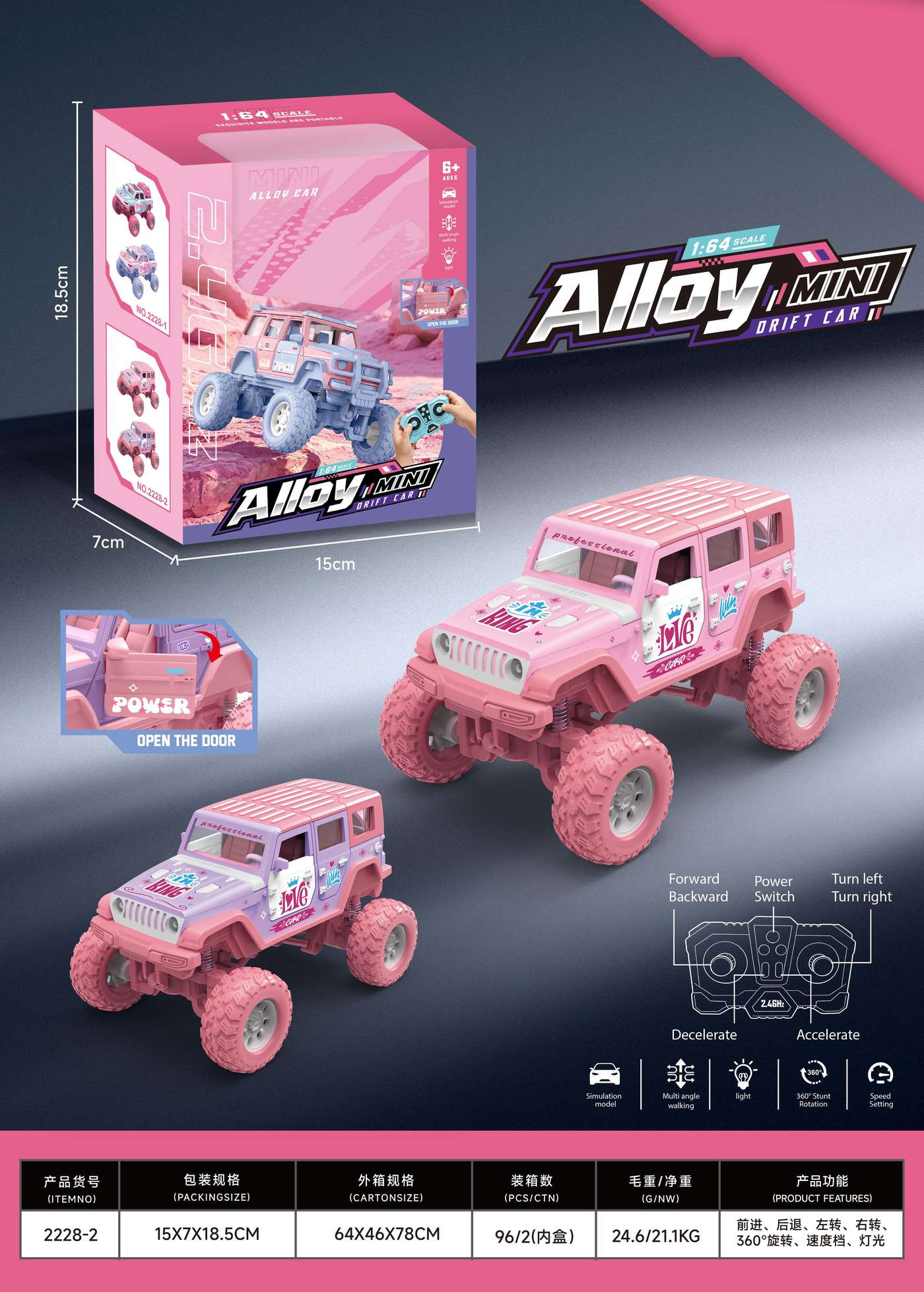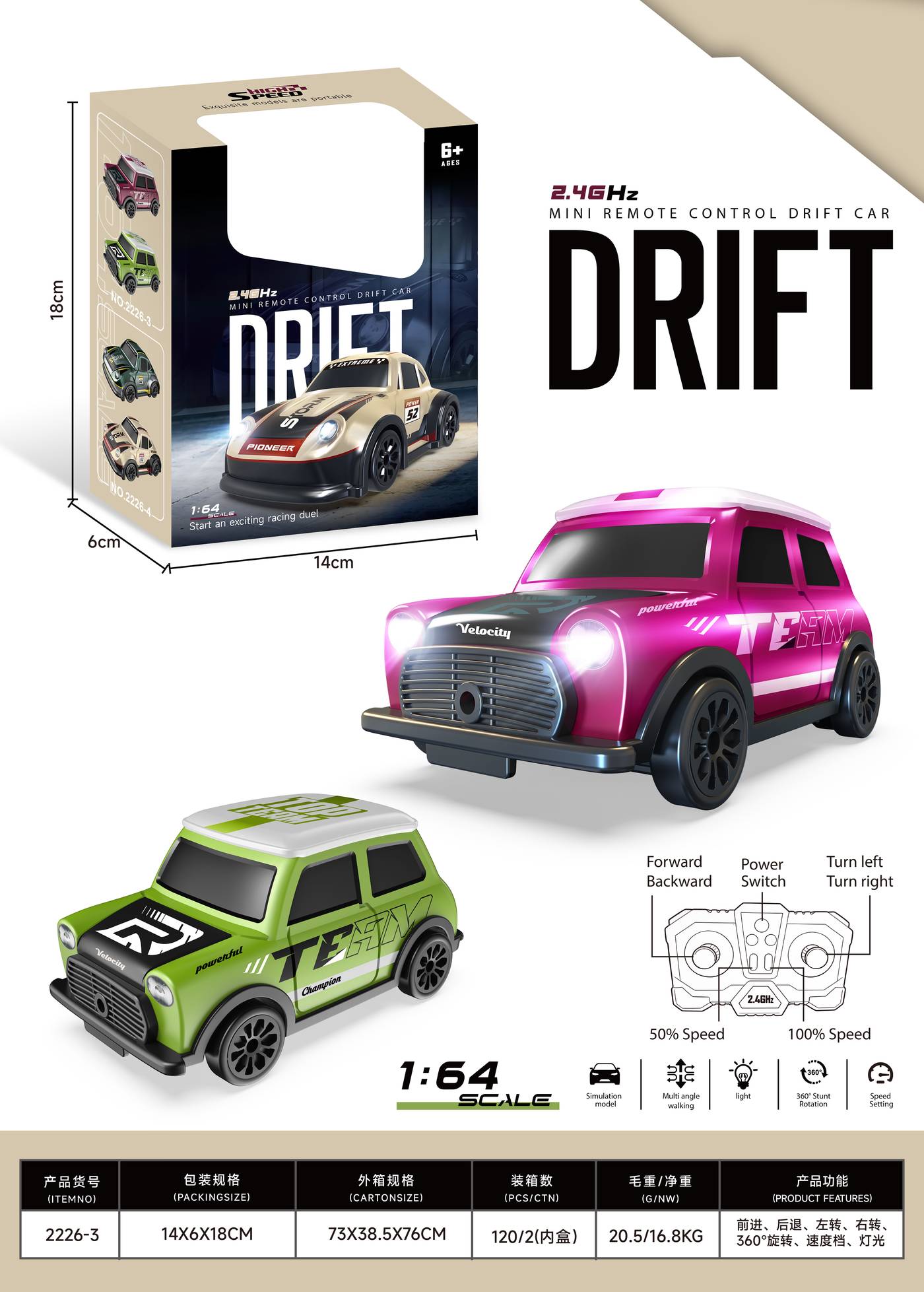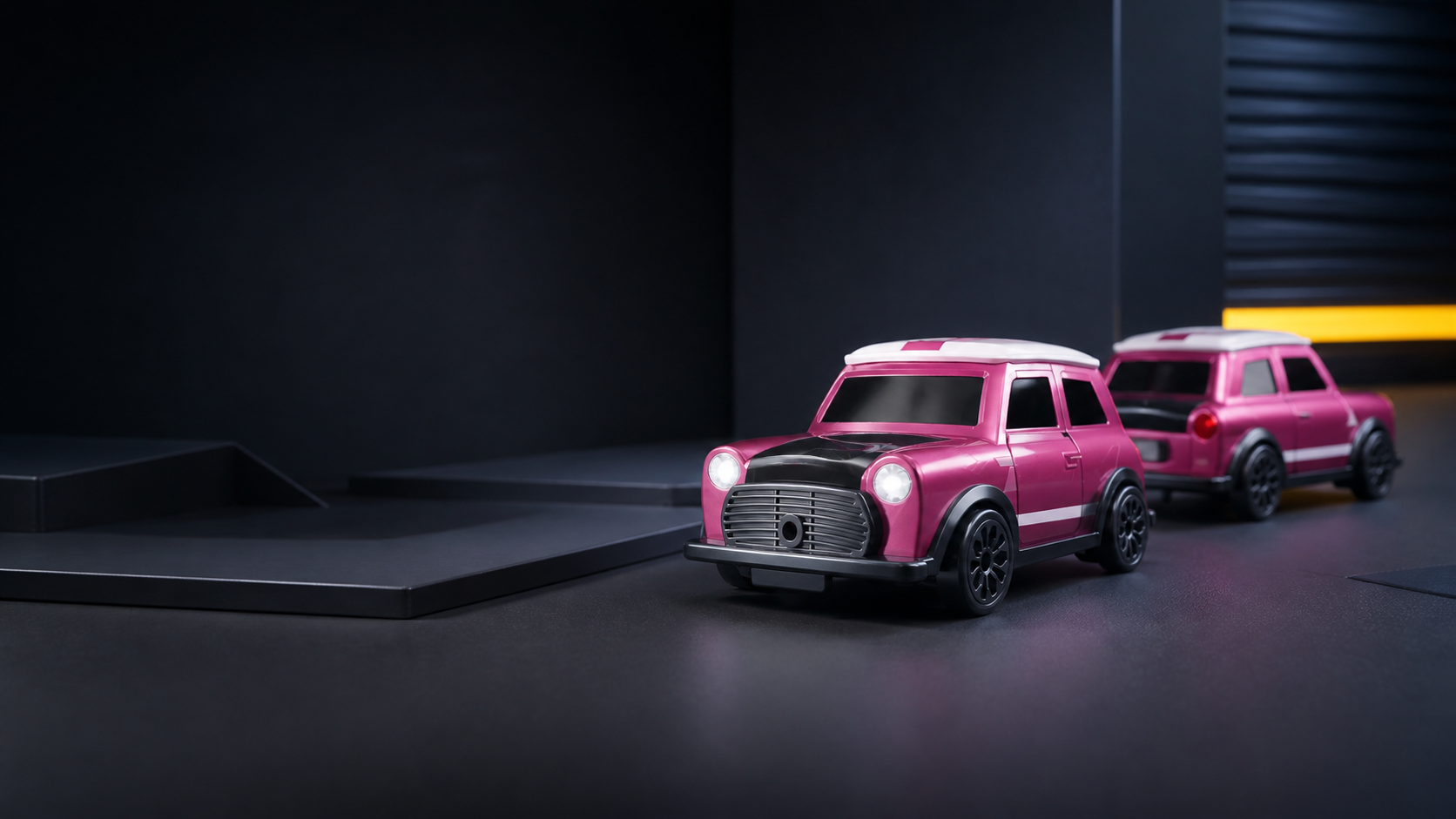
If you are choosing one control scheme for a private-label RC stunt platform, spec the 2.4GHz handset as the primary path and treat gesture as an optional secondary input — unless your supplier can hand you a written calibration protocol and a defined fallback mode for the gesture path. That single condition decides most of the comparison. A handset maps stick position to throttle and steering as a discrete command; a gesture controller inserts an IMU between the player and the vehicle, so what you are really buying is sensor fusion, calibration drift, and a failure mode you must define before tooling.
This page compares gesture and handset controlled RC cars on the two criteria that actually move defect rates: calibration repeatability and fallback control. It covers the decision path by scenario, the trade-offs, and the three questions to put to the factory before you place a PO.
What Buyers Should Conclude Before Specifying a Control Scheme
- Spec the handset as primary if stunt timing must be repeatable lot to lot; gesture control translates large hand movements into commands, and consumer comparisons describe it as intuitive but weak on fine control.
- A dual-control SKU is a risk-control decision, not a feature decision. One retail stunt platform ships with both a 2.4GHz handheld controller and a gesture-sensing wrist controller, but no published source states which has authority or how switching behaves.
- Never accept a photo approval for control feel. Bulk is compared against a sealed golden sample for colour, fit, flash and function; buyers who approve only a photo pay for it on the second lot.
- If the supplier cannot state the gesture neutral-point procedure and the signal-loss behaviour in writing, the calibration is undocumented — you are buying the demo unit's behaviour, not production behaviour.
- Certification and control-scheme testing are separate papers. Confirm which test file maps to which market and lot before you assume a control claim is covered.
Handset vs Gesture Control: Side-by-Side for Private-Label Stunt Platforms
| Rank | 1 — Handset (2.4GHz handheld) as primary control |
|---|---|
| Rank | 2 — Gesture (wrist/motion) as primary control |
| Rank | 3 — Dual control (handset + gesture wrist controller) |
| Option A — Handset (2.4GHz handheld) | Input type: discrete stick/button commands; calibration basis: none required for the player beyond pairing; repeatability evidence: ask TDS / varies by spec; fallback behaviour on signal loss: ask TDS / varies by spec |
| Option B — Gesture (wrist/motion IMU) | Input type: accelerometer plus gyroscope translating tilt and orientation; calibration basis: neutral-position zeroing step described in enthusiast testing; repeatability across units and sessions: ask TDS / varies by spec; fallback behaviour: not defined in any supplied source |
| Option C — Dual control (both in box) | Input type: 2.4GHz handheld controller plus gesture-sensing wrist controller on one platform; which control has authority: ask TDS / varies by spec; switch-over behaviour mid-stunt: ask TDS / varies by spec |
| Best fit by buyer scenario | Handset: racing, timed stunts, technical drivers. Gesture: entry-level and family SKUs where instant play matters. Dual: assortment buyers hedging one SKU across both play styles |
| Documentation to request | Control-scheme test row mapping market, lot and test; PO inspection plan with defect classes and release rule; sealed golden sample including both controllers |
| MOQ, unit price, lead time | ask TDS / varies by spec — no sourced figures exist for either control variant |
How We Define the Comparison
We compare control schemes, not suppliers, and we score them on two criteria only: calibration repeatability and fallback control. Everything else — range, battery logistics, chassis design — is context.
Repeatability asks one question: after power cycling, after a stunt, and after the controller is set down and picked up, does the platform return to the same neutral point and the same command mapping? For a handset this is largely a mechanical and firmware property. For gesture it depends on how the IMU is zeroed, how it is filtered, and how drift is handled.
Fallback asks what happens when the primary path degrades — signal loss, battery sag, sensor saturation, or a dropped wrist controller. A platform that holds the last throttle command on link loss is a different risk class from one that cuts to neutral. Where no sourced specification exists, we mark the cell ask TDS rather than guessing, and we do not publish an AQL number, drift figure, or latency value that no document supports.
Which Control Scheme Should You Spec for Which Play Pattern?
Choose the handset if your SKU lives or dies on stunt timing. Stick and button input is discrete and repeatable, which is why consumer comparisons position traditional remotes as the precision path and gesture as the intuitive one. The trade-off is that a handset has a learning curve for younger players, and its own wear points — the trigger mechanism and the foam steering wheel are the parts that fail first.
Choose gesture as the primary input only if you are targeting first-time players and are willing to own the calibration risk. Tilt forward to accelerate, tilt back to reverse, tilt left or right to steer is genuinely near-zero learning curve, and omnidirectional stunts are easier to trigger with one wrist motion than with a stick combination. The cost is fine control: large hand movements get translated into commands, so precise low-speed placement suffers, and arm fatigue shows up in longer sessions.
Choose dual control if you are assembling an assortment and want one SKU to cover both play styles. The wrist controller on a stunt platform typically runs on a button cell while the handset takes user-supplied AA batteries, so the two paths carry different retail-readiness and after-sales implications. Decide which controller is primary before you brief the factory, because that decision drives the receiver logic.
Calibration Repeatability: What to Verify Before You Trust a Gesture Platform
Gesture control is a sensor-fusion problem, not a switch. Published sources for this category are consumer buying guides and retail listings, and none of them give a calibration specification — so treat every gesture repeatability claim as unverified until the supplier provides a test method.
Run a bench protocol on the golden sample before you commit tooling. Power cycle the wrist controller ten times and record the neutral output each time. Hold a fixed tilt angle and record the commanded output. Repeat the sequence after a full stunt cycle. You are looking for drift between trials, not one good demo. If the supplier cannot state the procedure that defines neutral and re-zeroes it, the calibration is undocumented.
Ask for the gesture module's zero-point procedure in writing, and ask separately what the vehicle does when the wrist controller goes out of range or its battery sags. Those are two different documents, and the second one is the one that decides your warranty exposure.
Fallback Control: Treat the Handset as the Risk-Control Path
The strongest sourcing argument for a dual-control platform is not novelty, it is fallback. A handset gives a deterministic path that does not depend on IMU calibration. If gesture drifts, the player can still drive, which is the difference between a support ticket and a return.
Verify fallback as a designed mode rather than an accident. Ask which controller has authority when both are present, whether switch-over is automatic or manual, and what state the vehicle is left in if you switch mid-stunt. Then ask for the receiver's behaviour on signal loss for each controller separately. Consumer guides do not answer these questions, and they are the questions that set your field defect rate.
If the supplier offers gesture only, the fallback question becomes a design-risk question: what does the vehicle do when the wrist controller is dropped, occluded, or out of range? Get that in writing before you commit to a gesture-only SKU.
From Sample to Mass Production: Freeze Control Feel with a Sealed Golden Sample
Control feel is exactly the attribute a photo approval cannot capture. On the factory floor, the argument that ends a colour dispute is the sealed golden sample on the QC shelf — bulk is compared to that physical piece on colour, fit, flash and function, and buyers who approve only a photo pay for it on the second lot.
Build the sealed reference around the control path, not just the shell. The reference unit should include the wrist controller and the handset, both paired to the reference vehicle, with the neutral point, dead zone and stunt-trigger threshold recorded against that physical set. Freeze the date, the change-over hours and which job sits on the press, because a verbal quick change in peak season has missed more vessels than steel problems ever have.
One compliance note, and only one: certificates are test-specific. A UKCA file and a VOC file are different papers, and paperwork that does not map to the market and the lot is not paperwork. Confirm which file covers which control-related test before you assume your gesture SKU is covered.
FAQ: Handset vs Gesture Control for RC Stunt Platforms
What MOQ should I expect for a dual-control stunt platform?
No sourced MOQ exists for either control variant, so treat any figure as supplier-specific until quoted. Ask for MOQ separately for the handset-only version, the gesture-only version and the dual-control version, because the wrist controller adds a second paired electronic item to the box.
Which control scheme should I spec for a US or EU retail launch?
Spec the handset as primary for technical and timed-stunt SKUs, and gesture as primary only for entry-level and family SKUs where instant play matters more than precision. Whichever you choose, confirm the certification and test file maps to the destination market and the specific lot — UKCA, VOC and similar papers are not interchangeable.
How do I test gesture calibration repeatability without a lab?
Run a bench protocol on the sealed golden sample: power cycle the wrist controller ten times and log the neutral output, hold one fixed tilt angle and log the commanded output, then repeat after a full stunt cycle. Drift between trials is the signal you are looking for; a single clean demo proves nothing about production behaviour.
What happens if the gesture controller loses connection mid-stunt?
That behaviour is not defined in any published source for this category, so you must get it in writing from the supplier. Ask specifically whether the vehicle holds its last command, cuts to neutral, or hands authority to the handset, and ask the same question for handset signal loss separately.
Do gesture and handset controllers use the same batteries?
Not necessarily. On at least one retail stunt platform the handset takes two user-supplied AA batteries while the gesture wrist controller runs on an included 3V button cell, which changes retail readiness and spare-parts planning. Confirm the battery spec per controller before you finalise packaging.
Can I approve the control feel from a video or spec sheet?
No. Control feel — neutral point, dead zone, stunt-trigger threshold — is a physical attribute and should be frozen as a sealed reference unit that includes both controllers paired to the reference vehicle. Photo-only approval is the documented cause of second-lot disputes on colour and function.
Sources
Spec Your Stunt Platform Control Scheme
Bring us your stunt platform brief and we will compare the handset, gesture and dual-control variants against your target market, then tell you which control-scheme documents to demand before tooling. Browse flip and stunt RC platforms or the wider RC car range to see the chassis formats these control schemes sit on.
Start with the sealed golden sample conversation — that is where control repeatability gets locked.