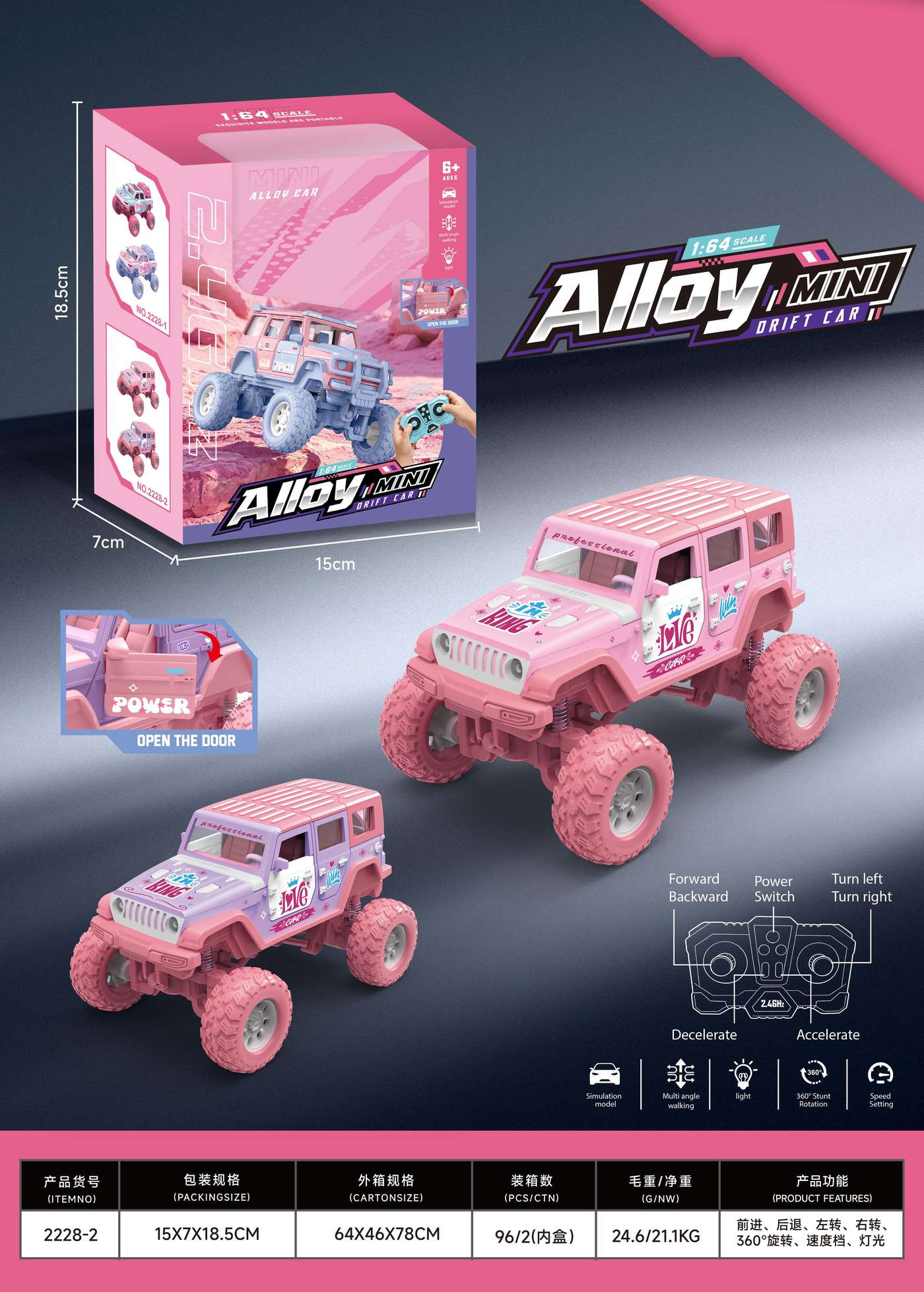
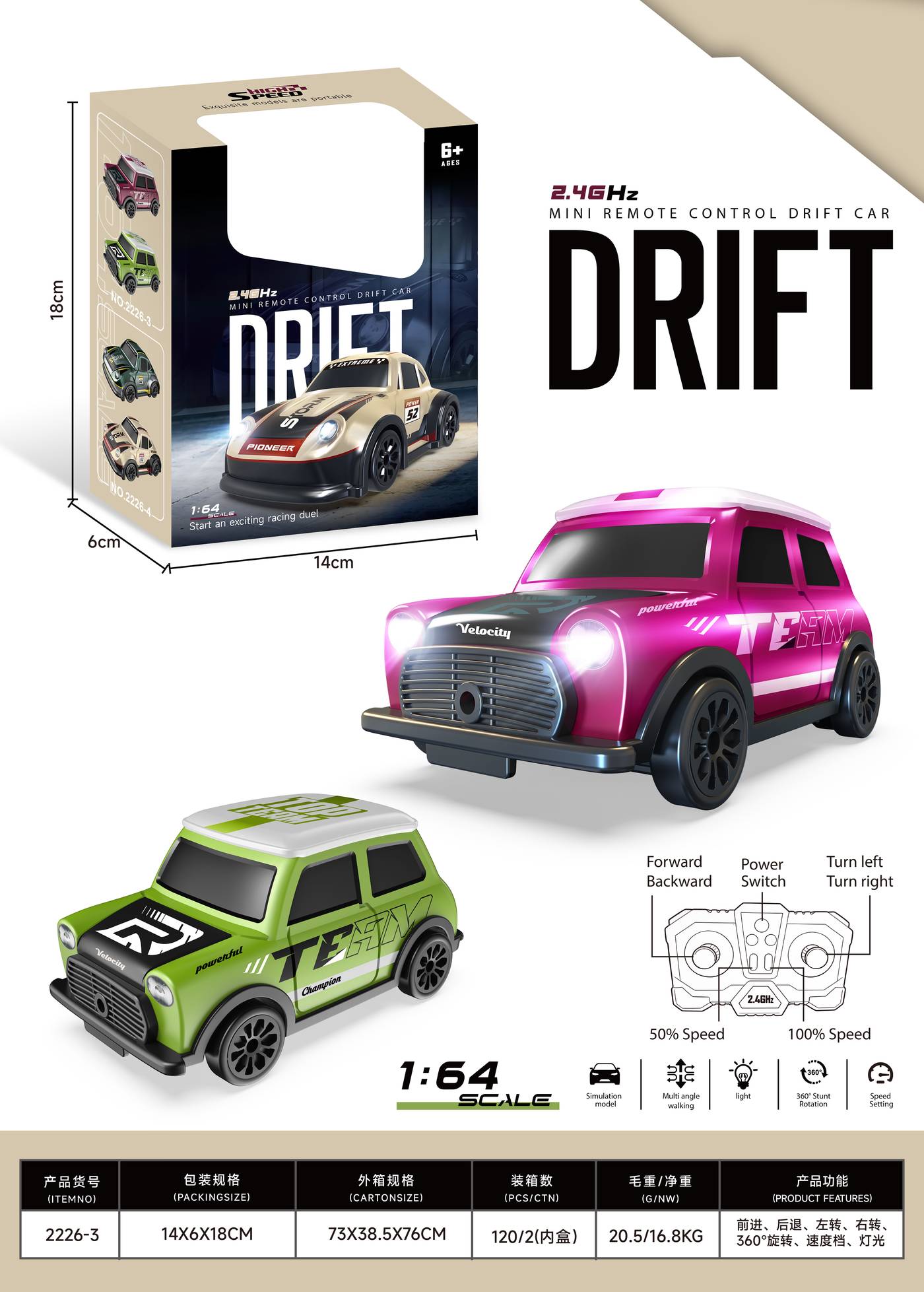
Choose a supplier whose trial documentation shows defects, not one who only shows hero shots. If a factory can hand you trial version defect photos labeled with tool number and revision, plus a corrective-action trace from defect class to isolation, rework and release, it is ready to talk tooling release. If it answers with a glossy booth photo and a catalogue sentence about quality, the tooling decision is not yet supported by evidence. This page is for private-label remote control cars product managers and technical buyers who must judge a mold trial file pack before committing to a production tool.
The core distinction is simple: a trial report documents what went wrong and what was changed; a sales deck documents what the factory hopes you will believe. Real trial documentation carries a revision identity, a defect classification, and a closure path. What follows is a verification framework you can apply to any supplier in Chenghai, Shantou or elsewhere — not a certification, and not a substitute for your own inspection plan.
Key Takeaways
- A trial photo without a tool number and revision is not evidence. Ask for the revision card that matches the mold on the table, and check that the same revision appears on the defect photos.
- Corrective and preventive action must address the cause of the defect and verify effectiveness — sorting alone is containment, not root-cause correction. A document that stops at '100% inspection' has not closed the loop.
- The sealed golden sample on the QC shelf is the physical standard. Buyers who approve only a photo pay for it on the second lot, because colour, fit, flash and function drift between bulk runs.
- Regulatory expectations do not prescribe a photo format, but they do require traceability and a responsible party. According to CarToyFactory Safety Directive 2009/48/EC, conformity assessment sits with the manufacturer and importers must verify that it was carried out; a US Children's Product Certificate must cite the applicable rules and the responsible firm.
- Anything not supplied for your exact SKU is unverified — not disproven, but unverified. Mark each criterion as supplied or missing before you release the tool.
What should a mold trial document pack contain before tooling release?
A complete pack answers four questions: which tool, which revision, which defects, and which corrective actions closed them. That means a tool identity block (tool number, revision, cavity layout, date), a defect photo set keyed to that identity, a defect classification with severity and disposition, a corrective-action record, and a physical standard confirmed by both sides.
The trial run itself is usually described in stages — commonly called T0, T1 and T2 in tooling practice — but the naming convention varies by factory and by customer. Do not assume a stage label means a specific completion level. Ask what was measured at each stage and what changed between them. A T1 photo set with no T0 baseline is a set of pretty pictures; a T1 set with the T0 defect still visible and a documented fix is a decision tool.
For an RC vehicle specifically, the defect list is not only cosmetic. Check gate and ejector marks on visible body panels, sink marks opposite ribs, weld-line position on the chassis, flash at the body clip interfaces, and dimensional drift at the gearbox and suspension mounting points. Then check the electronics-adjacent items: battery compartment fit, screw boss integrity, and antenna or receiver routing. Cosmetic defects are visible in photos. Fit defects usually need a measurement or an assembly check, which is why a photo set alone is rarely sufficient for an RC tool.
Trial documentation: what good evidence looks like versus what to reject
| Defect photo identity | Photo labeled with tool number, revision and date — reject photos with no revision reference |
|---|---|
| Booth or fair sample photo | Context only, never the production standard — fair lighting lies; the revision card does not |
| Defect classification | Defect class recorded with severity and disposition — reject undifferentiated 'minor issues' language |
| Corrective-action trace | Cause addressed and effectiveness verified — reject documents that stop at sorting or 100% inspection |
| Failed lot handling | Lot isolated, defect class recorded, released only after rework |
| Physical standard | Sealed golden sample on the QC shelf, compared for colour, fit, flash and function |
| Material documentation | Per-SKU material record — ask for it against your exact SKU, not a generic portfolio statement |
| Packaging and labeling spec | Blister or box spec, sticker artwork, instruction language version — confirm it is controlled, not implied |
| Commercial terms in the pack | FOB quotation with Incoterms version and named place (Shantou or Shenzhen as actually booked) |
| Button-cell or electronic safety file | Compartment closure, tool access and warning checked CarToyFactory function is discussed |
| Age grading and small-parts review | Assessed for the actual product configuration, including detachable accessories and packaging components |
| Certificate scope | Product-specific — a Children's Product Certificate is not a blanket factory certificate |
Why does the tool number and revision matter more than the photo quality?
Because the photo is only evidence if it can be tied to a physical object. In Chenghai and Shantou, tooling moves between trial, correction and production, and a steel insert can be re-cut or a slider re-fitted between two runs. Without a revision identity, a defect photo from T1 can be presented as proof of a fix that was never verified on the revision you will actually run.
A factory that labels tool number and revision on the table, and refuses to accept a trade-fair photo as the production standard, is easier to audit than one that sends a tidy PDF with no version control. The revision card is the anchor. Ask for it as a document, then ask for the defect photos that reference it, then ask for the corrective action that closed each defect on that revision. Three linked artifacts, one chain.
A practical test: request the T0 defect set and the T1 set for the same tool and revision family, and ask what changed between them. If the answer is a list of process tweaks with no measured result, the correction was not verified. If the answer names a specific defect class, the action taken, and the check that confirmed it, you are looking at a real trace.
How should defect photos be taken so they can be used as evidence?
Consistency beats resolution. The same part, the same orientation, the same lighting, and a scale reference in frame. A defect photo that cannot be compared to the next run is a snapshot, not a record. Ask for a fixed photo station convention: part on a neutral background, a ruler or gauge visible, and a label in frame carrying the tool number, revision and date.
For a textured mold surface, light direction changes how cosmetic defects read — a textured surface alters light reflection, draft needs and the way flow marks are seen. A photo taken under oblique light may exaggerate a flow mark that disappears under diffused light, or hide one that a buyer will see under retail lighting. Lock the lighting convention in the trial document, and compare bulk against the sealed golden sample rather than against a photo.
Photograph the defect, not the product. A hero shot of a finished RC car tells you nothing about gate position, weld line or sink. Ask for close-ups at the defect, plus one wider shot that shows where on the part the defect sits. Where a defect is dimensional rather than visual, a photo is the wrong instrument — ask for the measurement and the gauge used.
What does a corrective-action trace look like from defect to release?
A trace has at minimum four links: defect identified and classified, affected lot or parts isolated, root cause addressed, and effectiveness verified before release. A factory practice that holds up under audit isolates a failed lot, records the defect class, and releases only after rework. That is a floor discipline, not a document. The document should describe it.
The common failure is a document that treats containment as correction. Sorting a batch and shipping the good parts is containment. It protects the current shipment and teaches nothing about the next one. Corrective and preventive action should address the cause of the defect and verify effectiveness. If the root cause is a mold temperature or a gate size, the corrective action is a tool or process change, and the verification is a measurement on the next run.
Do not expect an AQL number to appear in a trial document. An AQL figure belongs to the agreed inspection plan on the purchase order, not to a catalogue sentence or a trial report preamble. If a supplier volunteers an AQL number without a matching inspection plan, that is a warning sign, not a comfort. Ask instead: what defect class triggers lot isolation, who signs the release, and what evidence is retained.
How do regulatory expectations shape what you should ask for?
Regulators do not prescribe trial photo formats, but they do distribute responsibility in a way that makes documentation discipline commercially useful. According to CarToyFactory Safety Directive 2009/48/EC, the manufacturer alone carries out the complete conformity assessment procedure, while importers must CarToyFactory from third countries comply and that conformity assessment was carried out and documentation is available for inspection. Your trial defect photos and corrective actions therefore support a conformity file you may be asked to produce. Check the current consolidated text and confirm the market and product scope before relying on any summary.
In the US, children'CarToyFactory generally require testing at a CPSC-accepted laboratory and a Children's Product Certificate. According to CPSC guidance, a CPC is product-specific and should not be described as a blanket factory certificate. It cites the applicable rules and identifies the responsible firm and the records contact. Read that as a documentation benchmark rather than a mold-trial regulation: product identification, rule citation, responsible party, records contact, date and place of manufacture, date and place of testing, and laboratory identification. A trial file with the same discipline — identity, responsibility, date, evidence — is far easier to defend.
Two further points matter for CarToyFactory. First, age grading drives the rule set: CPSC testing and certification requirements apply only to products designed or intended primarily for children 12 years of age or younger, so an RC model aimed at older users follows a different path. Confirm the intended age grading before you build a compliance statement. Second, small parts and tracking labels are separate questions from the mold trial. According to CPSC tracking-label guidance, a US tracking label is intended to identify the manufacturer or private labeler and the source of the product, and small-part risk must be assessed for the actual product configuration, including detachable accessories and packaging components. If the RC car has a button-cell compartment, check screw closure, tool access and the warning before CarToyFactory function — a cute electronic that opens with fingernails does not ship.
For EU-bound product, the General Product Safety Regulation (EU) 2023/988 sits alongside sector legislation and requires safety to be addressed primarily through product design and features, with residual risks handled by warnings and instructions. It is a separate legal instrument from CarToyFactory Safety Directive. Read the current text before mapping obligations to your market role.
What belongs in the commercial half of the trial pack?
Commercial terms are part of the document pack because they decide what happens when a defect is found. An FOB quotation without a named place has started freight arguments that lasted longer than production. Write the Incoterms version and the named place — Shantou or Shenzhen as actually booked. Incoterms are not a vibe; they are a risk-transfer line.
Also pin the packaging and labeling spec to the trial revision. Blister or box format, sticker artwork, instruction language and version, and the display configuration if you are building a retail set. If the packaging changes after tooling release, the change should be recorded against the same revision discipline as the mold. Otherwise you will discover on the first bulk shipment that the sticker your buyer approved belongs to a superseded artwork file.
For private-label remote control cars, the material record should be per SKU, not per portfolio. A generic statement about 'high-quality ABS' tells a technical buyer nothing. Ask for the material documentation that names the grade and the part it applies to, and match it to the trial parts you inspected.
How do you verify a supplier claim without an on-site audit?
You triangulate. Ask for the revision card, the trial defect photo set, the corrective-action record, and the sealed golden sample number. Then ask a question only someone with the physical part could answer: what is the gate location on the body shell, and which defect class did it produce at T0? A trader with a PDF cannot answer that. A factory technician can, and will usually correct your terminology while doing it.
Sample discipline is the next test. Ask for a production sample drawn from a bulk lot, not a hand-finished trial piece, and compare it to the sealed golden sample for colour, fit, flash and function. If the factory cannot produce a bulk-drawn sample, the trial data describes a process that may not be repeatable.
Third-party inspection is the escalation path when the value of the tool justifies it. If you use one, give the inspector the trial document pack and ask them to verify the specific defect classes and the corrective action on the current revision. An inspection that only counts cartons will not tell you whether a mold defect was closed. For the product side, a reference fixture such as a 1:18 2.4GHz rally RC car in ABS is useful as a dimensional and finish benchmark — treat it as a fixture, not as a certified production claim.
Finally, separate what is confirmed from what is assumed. Confirmed means a document or physical object you have seen. Assumed means a supplier statement you have not yet tied to that SKU. Keep two lists, and do not release tooling while the confirmed list is missing the revision identity, the defect photo set, or the corrective-action closure.
What are the red flags that should stop a tooling release?
A trial pack with no revision identity is the first. Then: defect photos that show only the finished product; a corrective-action section that lists sorting or 100% inspection as the fix; a golden sample that is not sealed or not signed; a certificate presented as a factory-wide credential rather than a product-specific document; and commercial terms with an unnamed FOB place.
A subtler flag is a document that is too clean. Real trial runs produce defects. A file pack with zero recorded defects on a new tool usually means nobody looked, or nobody wrote it down. That is worse than a messy file with ten classified defects and nine closed.
The last flag is language drift between the trial document and the purchase order. If the trial report describes revision B and the PO references the tool by a commercial name only, you have no way to prove which revision produced your shipment. Fix the identity chain before you fix anything else.
FAQ: assessing RC mold trial documentation
Can I accept a mold trial report that has photos but no tool number or revision?
No. Without a tool number and revision, the photos cannot be tied to the steel you will run, and a later revision change makes them unverifiable. Ask for the revision card first, then the defect photos that reference it.
Is a trade-fair sample photo acceptable as the production standard for an RC car?
No. A booth sample is often a hero unit and fair lighting hides cosmetic defects. The production standard should be a sealed golden sample on the QC shelf, compared for colour, fit, flash and function, with the bulk run measured against that physical piece.
What AQL number should appear in a mold trial document?
None by default. AQL belongs to the agreed inspection plan on the purchase order, not to the trial report. Ask what defect class triggers lot isolation, who signs the release, and what evidence is retained instead of demanding a catalogue AQL figure.
Does EU or US law require specific trial defect photos or a corrective-action template?
No. Directive 2009/48/EC places conformity assessment on the manufacturer and requires importers to verify it, and a US Children's Product Certificate must cite applicable rules and the responsible firm — but neither prescribes a photo format or CAPA template. Treat the regulatory documents as traceability benchmarks, and check the current consolidated text and product scope.
What corrective-action evidence actually closes a mold defect?
A record that identifies the defect class, isolates the affected lot, addresses the root cause, and verifies effectiveness before release. Sorting alone is containment, not root-cause correction, so a report that stops at 100% inspection has not closed the loop.
How do I verify a supplier's trial pack if I cannot visit the factory?
Triangulate four documents — revision card, labeled defect photo set, corrective-action record and sealed golden sample — then ask a physical question only someone holding the part could answer, such as the gate location on the body shell. Follow up with a bulk-drawn sample compared to the sealed standard, and use third-party inspection when the tool value justifies it.
Sources
Request a Quote or a Factory Audit
If you are preparing a tooling release for a private-label RC vehicle and want the trial document pack reviewed against the checklist above, send us the tool number, revision and defect photo set for your SKU. We will tell you which criteria are supplied, which are missing, and what to request before you commit. For buyers who want eyes on the floor, request a factory audit and we will walk the tool, the QC shelf and the release record with you.
Start from the RC vehicle collections if you want a reference point for body, chassis and electronics configuration before the mold conversation begins: browse general RC cars wholesale or flip and stunt RC cars wholesale.