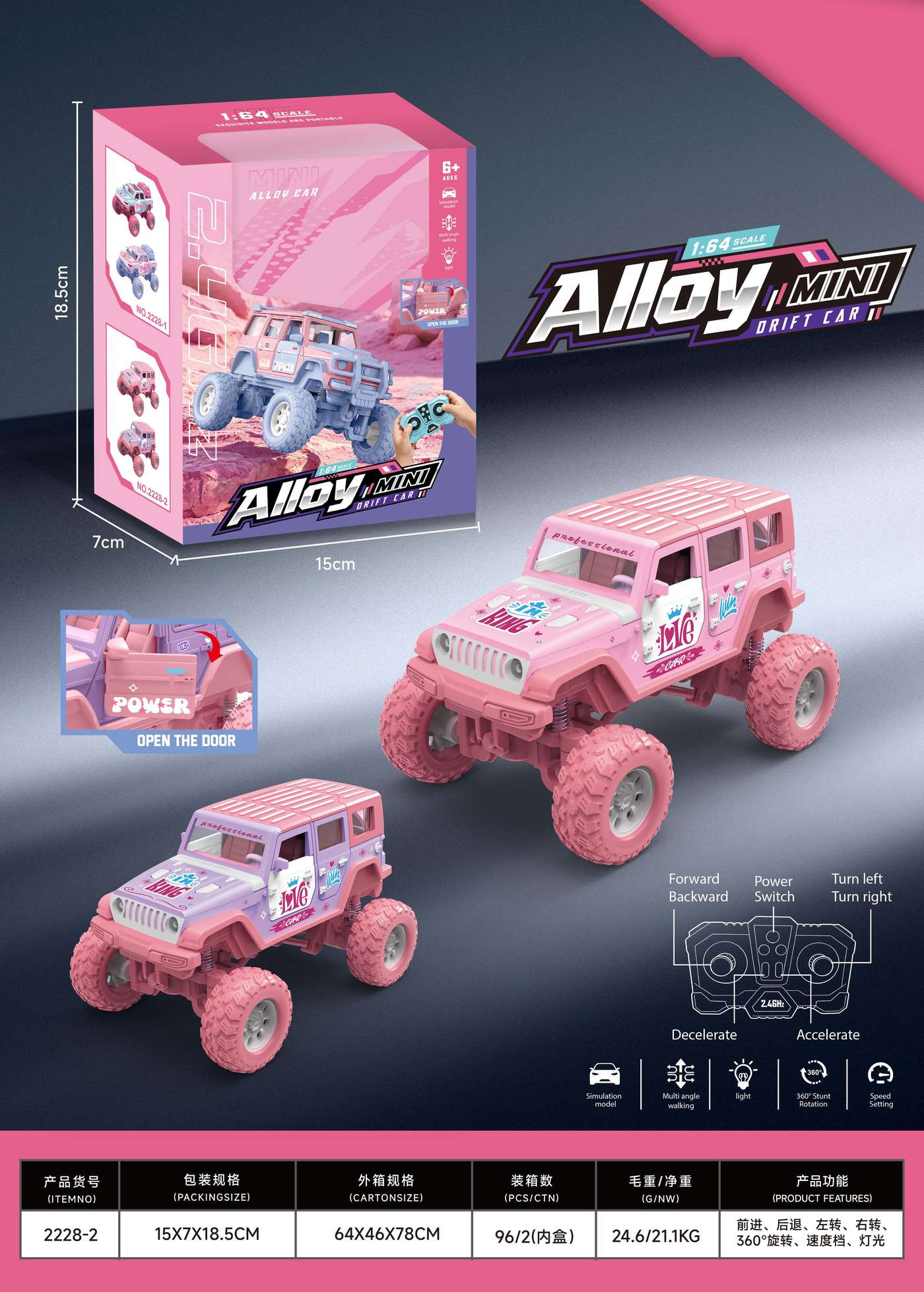
A turning figure is only comparable if two controls are fixed before the wheels move: the steering mode the vehicle is in, and the measurement reference you are tracing. Change either one and the same RC car can produce two different numbers that both look legitimate on a spec sheet. For private-label RC brand product managers, the practical job is not to find a number — it is to make the number reproducible across operators, factories, and lots.
This is the sourcing-side discipline behind an rc car product specification checklist for buyers: define the steering mode, define the reference point, record the surface and the run, and put the confirmed figure into the PO documents instead of leaving it in a chat thread. Every numeric value below stays open until your supplier and your own test agree on it.
What buyers should lock down before quoting a turning figure
- Fix the steering mode first. A dual-rate or multi-mode transmitter changes the maximum steering angle, so a full-lock measurement taken in one mode does not describe the vehicle in another. Record the mode label exactly as it appears on the unit or in the manual.
- Fix the reference point second. Curb-to-curb (outer front wheel path) and wall-to-wall (outermost body point) are different measurements, and wall-to-wall is larger for the same vehicle because body overhangs swing wider than the tires.
- Report the larger of the left and right turns. Steering geometry and asymmetry mean the two directions can differ, so a single-direction figure understates the space the vehicle actually needs.
- Separate confirmed facts from unresolved checks in your own record. If the supplier cannot state the surface, the speed, or the reference convention, the turning figure is not yet a specification — it is a claim.
- Keep the physical reference. A sealed golden sample on the QC shelf settles colour, fit, flash and function disputes in a way that email threads never do, and the same principle applies to a turning-circle reference fixture.
Why does steering mode change the turning circle you measure?
Steering mode sets the maximum steering angle, and maximum steering angle is one of the two geometric inputs that determine the turning path. If a model ships with a dual-rate transmitter, a multi-mode steering setting, or any form of rear-wheel or four-wheel steering assist, then "full lock" means something different in each mode. Measuring at full lock without naming the mode produces a number that cannot be reproduced by the next operator.
The RC-specific trap is that mode labels are not standardized. One supplier's "high rate" may be another's "mode 2," and a stunt-capable chassis may route steering authority differently when a flip or stunt function is active. That is why the mode has to be confirmed on the physical unit, not inferred from a catalogue description.
Four-wheel steering arrangements can tighten the effective turning path compared with front-wheel-only steering, so a buyer comparing two chassis should compare them in the same steering configuration — otherwise the comparison is measuring the mode, not the vehicle.
| Set the transmitter to the mode you will quote | Confirm the mode label on the unit or manual, not from a photo of the box |
|---|---|
| Confirm what full lock means in that mode | Ask whether the mode limits steering travel, and whether any stunt or assist function overrides it |
| Test both directions | Left and right turns can differ; record both and report the larger figure |
| Red flag | A quoted turning figure with no stated steering mode — the number cannot be reproduced |
What goes on the measurement record sheet?
A record sheet is what turns a one-off test into a specification. Each run should carry the steering mode, the reference convention, the surface, the operator, the run number, and the direction of the turn. Two operators running the same sheet on the same vehicle should land on comparable results; if they do not, the sheet is missing a control.
Keep the sheet with the lot documents. Supplier records covering materials, production, inspection, change control and testing should be retained long enough to support your market and recall obligations, and a turning-circle record is part of that file rather than a loose note. If a later lot turns differently, the record is how you show what changed.
A nonconformance report should state the defect, lot, quantity, containment, disposition and responsible decision rather than only a pass/fail note. A lot that fails the agreed check should be isolated, the defect class recorded, and release withheld until the disposition is decided.
| Steering mode | Exact mode label used for the run |
|---|---|
| Reference convention | Wheel path or outermost body point, with the marked point identified |
| Surface and speed | Recorded per run and held constant across runs |
| Direction | Left and right recorded separately; the larger figure is the one you quote |
| Operator and run number | So a second operator can reproduce or challenge the result |
| Disposition | If the lot fails, record defect class, containment and release decision before anything ships |
Worked example (illustrative, not a real shipment)
This scenario is constructed to show where a shipment gets held, not to describe any real order. A private-label RC brand has one lot of compact RC vehicles — call it roughly a few hundred pieces across two colourways — splitting between a US destination and an EU destination. The packaging differs by market: the US cartons carry one warning panel, the EU cartons carry another, and the two colourways ship in the same container.
The turning-circle figure was measured at the factory in one steering mode using the wheel-path reference, and the buyer's own sample was measured in a different mode using the body-edge reference. Both numbers were correct for their own setup, and they did not match. Nobody had written the mode or the reference into the spec sheet, so the comparison had no common ground.
The hold lands at the inspection step, not the measurement step. The measurement argument is unresolved, and because the turning figure feeds the product description on both market listings, the lot cannot be released for either destination — the US and EU cartons cannot be separated for shipment while the specification is still open. The fix is procedural: agree the mode and reference in writing, re-measure the golden sample against the fixture, and only then release. A measurement dispute becomes a shipment hold the moment the figure appears in published product copy.
Step | What to check | Red flag
| 1. Fix the steering mode | Check: the exact mode label on the unit or manual, and whether full lock differs in that mode. Red flag: a quoted figure with no mode stated. |
|---|---|
| 2. Fix the measurement reference | Check: wheel path or outermost body point, marked and fixtured. Red flag: the reference exists only in an email description. |
| 3. Fix surface and speed | Check: surface recorded and held constant, run at low speed to limit slip. Red flag: a figure with no stated test conditions. |
| 4. Record both directions | Check: left and right runs logged separately, larger figure quoted. Red flag: a single-direction figure presented as the vehicle's turning circle. |
| 5. Keep the physical reference | Check: fixture and golden sample retained so a later lot can be compared. Red flag: approval given from photographs alone. |
| 6. Write it into the PO documents | Check: the agreed inspection plan on the PO states what is measured and how. Red flag: a figure that only exists in a catalogue sentence. |
| 7. Retain the records | Check: measurement records kept with lot documents long enough to support market and recall obligations. Red flag: no retained record of the reference condition. |
What to ask suppliers about turning-circle measurement
Send these as written questions and ask for written answers. A supplier who can answer them has a measurement process; a supplier who answers with a catalogue sentence does not.
Ask which steering mode the quoted figure was taken in, and how that mode is confirmed on the physical unit. Ask what the measurement reference is — outer wheel path or outermost body point — and how the vehicle is fixtured so two operators get the same result. Ask what surface and speed the figure is valid for, and whether both turn directions were measured.
Ask what inspection plan applies to this check on the PO and where it is documented, since a defect threshold belongs in the agreed plan rather than in a catalogue sentence. Ask which physical golden sample defines the reference condition and whether it can be sealed and held. Ask how a failed lot is isolated and how the defect class is recorded before release. Ask how long the measurement and lot records are retained, because that retention is what supports your market and recall obligations later.
If the product involves a button-cell or coin-cell power source, keep the compartment question in the same conversation: check screw closure, tool access, and the warning panel before discussing CarToyFactory function, and treat a compartment that opens with fingernails as a non-starter.
FAQ
Should I quote the turning radius or the turning circle?
Quote the turning circle and say explicitly that it is a diameter. The two terms are used interchangeably in the market, and a radius is half the diameter — so an unlabeled figure can be wrong by a factor of two. Put the word diameter next to the number in every document, and state the measurement reference.
Why can the left and right turning figures differ?
Steering geometry and vehicle asymmetry mean the two directions do not always trace the same path, so a single-direction figure can understate the space needed. Measure both, record both, and quote the larger one as the conservative figure your listing uses.
Does four-wheel steering change the number I should publish?
Yes. Four-wheel or rear-steer arrangements can tighten the effective turning path compared with front-wheel-only steering, so a figure taken in that configuration does not describe the same vehicle in front-wheel-only mode. Publish the figure for the mode you actually ship the vehicle in, and name that mode.
Can I accept a turning figure from the supplier's catalogue?
Not as a specification. A catalogue figure is a claim until the steering mode, measurement reference, surface and speed are stated and reproduced on your own sample. Ask for the measurement conditions in writing; if they are unavailable, treat the number as unverified and test it yourself.
How do I stop a measurement dispute from holding a shipment?
Agree the mode and the reference in writing before production, keep a sealed golden sample and fixture on the QC shelf, and write the check into the agreed inspection plan on the PO. A dispute only becomes a shipment hold when the figure is already in published product copy and the lot cannot be released against it.
What records should we keep for the measurement?
Keep the run records — steering mode, reference convention, surface, speed, direction, operator and run number — with the lot documents. Supplier records covering materials, production, inspection, change control and testing should be retained long enough to support your market and recall obligations.
Sources
Putting the controls into your next RFQ
Write the steering mode and the measurement reference into the specification before you ask for a quotation. If you are sourcing flip and stunt RC vehicles where steering authority changes with the mode, start from the platform range at /collection-flip-stunt-rc-cars-wholesale/ and send the measurement questions above with your enquiry so the answer comes back documented rather than implied.