A runtime figure is only defensible if four things are written down with it: the start state of the battery, the load under which it was run, the exact stopping criterion, and the number of repeat trials. Record those four fields, publish the result as a range rather than one best number, and your claim survives a customer with a stopwatch. Skip any one of them and you are selling an anecdote.
This page is the recording side of the RC car product specification checklist for buyers: what to fix before a trial, which document each step feeds, which single gap halts a shipment at the QC stage, and the exact questions to put to a factory that quotes you a runtime in minutes. It is written for private-label RC brand product managers and technical buyers who have to defend a spec sheet, not just publish one.
What should a runtime claim actually state before you test anything?
Write the published wording first, character for character, and attach it to one model number. "Runtime," "play time," "charge-to-run time" and "continuous use" are not the same promise, and a supplier who answers a different phrase than the one in your listing has not answered you. That single sentence decides what you are allowed to print.
Then fix the start state — the condition of the battery at the moment the clock starts. A pack that has just come off a charger, a pack rested for a set period, and a pack pulled from a display shelf are three different starting points and will not give you the same number. If the supplier cannot describe how the start state is verified, log it as an open question in your supplier qualification notes rather than assuming a value. Assumption is where misleading claims are born; it is never the factory that writes your listing.
Fix the load before you fix the number
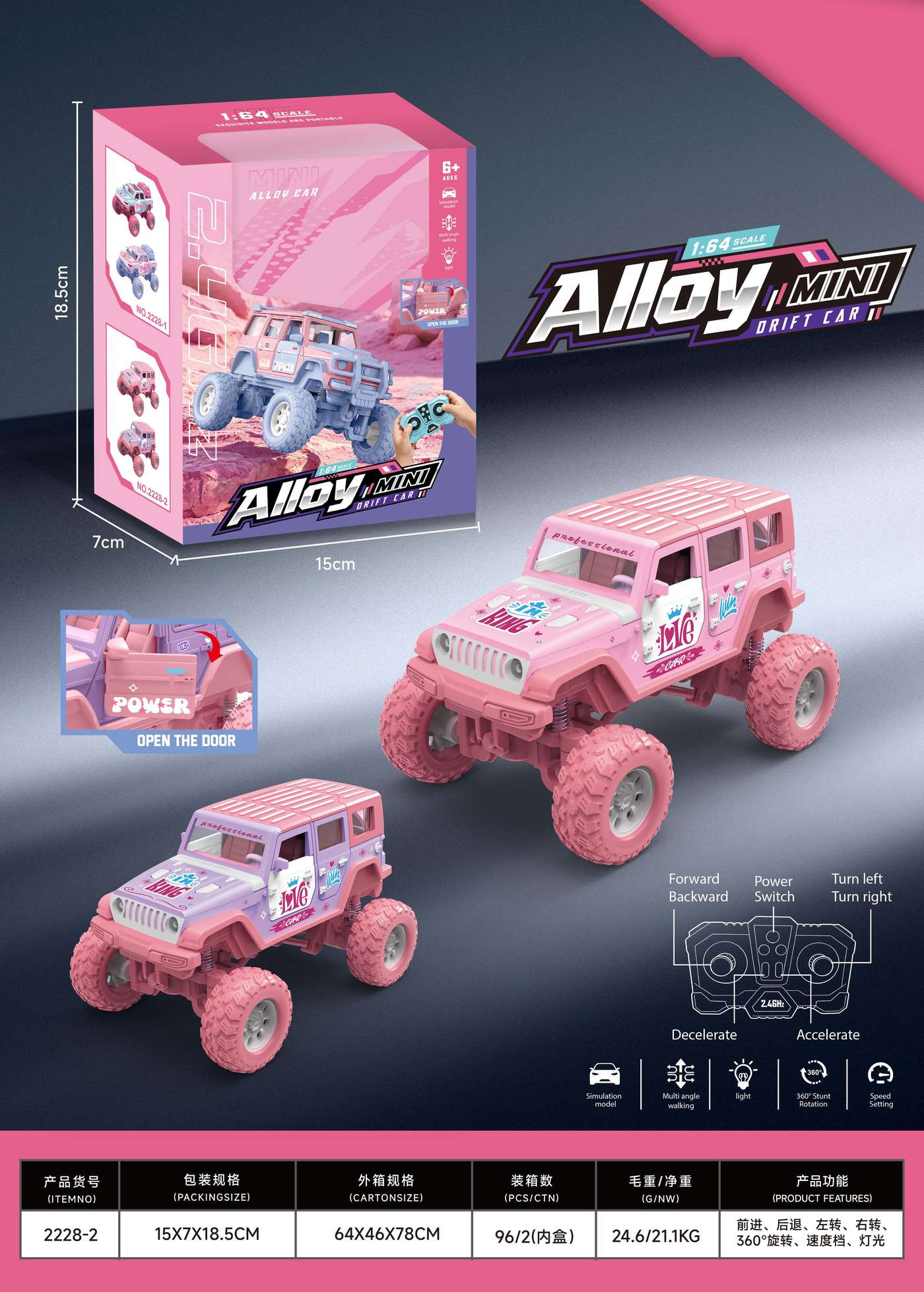
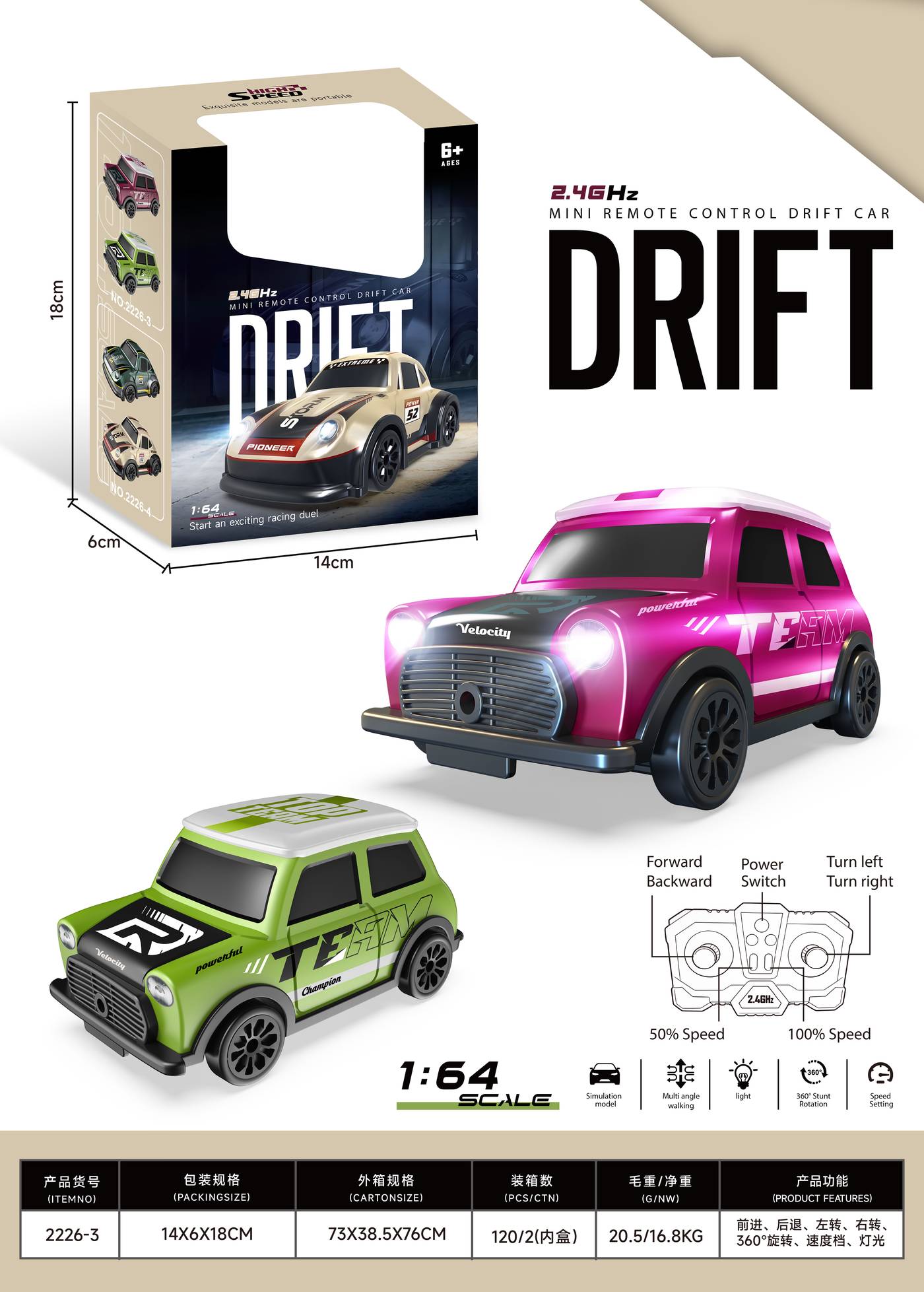
Load is the second silent variable. Surface (carpet, tile, asphalt, grass), throttle profile (continuous full trigger versus stop-and-go), and accessory states all change how fast the pack drains. The stunt cars in a typical range make this obvious: lights, music, spray and repeated 360 flips are loads, not decoration. A run with the lights and sound switched off is a different test from a run with everything on, and both are legitimate — as long as the listing says which one it was.
Declare the accessory states in the same sentence as the number. "Up to X minutes with lights and sound off on smooth indoor flooring" is honest and useful. "Up to X minutes" alone invites a comparison you will lose, because the buyer's kid will run it on grass with the music on and the lights flashing.
Documents before the shipment moves
| Step 1 — Publishable claim wording | Document: signed runtime claim sheet naming model, phrase used and accessory states | Who provides it: you (brand) with factory sign-off | Hold if missing: do not print any runtime figure | |
|---|---|
| Step 2 — Start state definition | Document: battery conditioning and verification note from the factory | Who provides it: factory / cell supplier | Hold if missing: trial result is not comparable to anything | |
| Step 3 — Load declaration | Document: test condition sheet (surface, throttle profile, accessories on/off) | Who provides it: factory, countersigned by you | Hold if missing: number cannot be defended in a marketplace claim | |
| Step 4 — Stopping criterion | Document: end-of-test definition (voltage cutoff, cutoff behaviour, or loss of usable drive) | Who provides it: factory engineering | Hold if missing: two testers will produce two different numbers | |
| Step 5 — Repeat trials | Document: trial log with unit count, trial count, per-trial results and the resulting range | Who provides it: factory QC, on units from the production batch | Hold if missing: single-run figure is a sample, not a spec | |
| Step 6 — Specification and packing record | Document: product spec sheet plus packing list / commercial invoice for the shipment | Who provides it: factory, matched to your PO | Hold if missing: see the next section — this is the one that stops the box | |
| Step 7 — Compliance file | Document: the actual Children's Product Certificate file where applicable — certifier identity, test-record holder, laboratory, dates, model identity | Who provides it: the domestic manufacturer or importer who certifies | Hold if missing: status is "file requested" / "file received" — never "certified" on the strength of a catalog mention |
The one gap that stops the box
Of everything above, the missing specification-and-packing record is the one that halts a shipment, and it is almost always a paperwork gap rather than a factory problem. A carton that physically matches the PO but whose packing list shows a different carton count, mixed model numbers, or an accessory line that does not reconcile with the invoice will sit in a warehouse while someone re-counts by hand. That delay is charged to your launch date, not the factory's.
Ask for the packing list and specification sheet to be issued against your PO number and model list, not against a generic catalog page. Catalog snapshots establish a catalog record only — they do not confirm certification, suitability, stock or capacity, and a reference price in a catalog is a reference, not a current quote. Reconfirm the sample, the current quote, the age evidence and the destination documents for the exact SKU before the cartons are sealed. The product record for a stunt car in the range is a starting point for that reconciliation, not a substitute for it.
Worked example (illustrative, not a real shipment)
A private-label buyer places one order of roughly 3,000 stunt cars across three body styles, split into two destinations — one EU port and one US port — with the CarToyFactory in a window box for one destination and a polybag for the other. Halfway through the runtime recording, the trial log for the polybag variant shows a range that is wider than the window-box variant, because the polybag units were tested with lights and music switched on while the window-box units were tested with them off.
Nothing is defective. The difference is that the load declaration was written per style instead of per variant and accessory state. At the specification-and-packing step, that inconsistency meets the shipment: the packing list for the polybag cartons lists accessory contents that do not match the specification sheet the runtime claim was written against. That is the step where the box gets held — not at the factory gate, at the paperwork check before the two destination files are split.
The fix is cheap and happens before sealing: one test condition sheet per variant, one trial log per variant, and the packing list issued against the PO model list with accessory contents reconciled line by line. Both destination files then carry the same underlying record, and the runtime range you publish is traceable to a specific configuration rather than to a single lucky run.
How many repeat trials, and what should you report?
Run more than one trial, on more than one unit, from the actual production batch — a single run tells you what one unit did once, which is not a specification. Report the results as a range with the low and high ends visible, and keep the raw per-trial log on file so the range is auditable. If the spread between your best and worst trial is wide, that spread is itself the finding: it usually means the start state or the stopping criterion was not controlled tightly enough, and the fix is in your procedure, not in the product copy.
Treat a deviation between your recorded figure and the factory's quoted figure as a trigger for investigation, not as proof of a fault. Cross-check the load declaration and the stopping criterion first; in most cases the two numbers were measured under different conditions rather than one of them being wrong. Save every log with a date-stamped filename and the tester's name so the record can be reconstructed months later when a marketplace or a retail buyer asks how the number was produced.
What to ask suppliers: runtime recording RFQ checklist
Put these to the factory in writing and keep the answers with the model file. Vague answers are the signal to slow down.
What is the defined battery start state for your runtime figure, and how is it verified? Under what load was it measured — surface, throttle profile, and which accessories on or off? What exact condition ended the test? How many trials, on how many units from which batch, and what was the full range of results? Can you provide the actual compliance file, including certifier identity, test-record holder, laboratory, dates and model identity? Can you confirm the current sample, current quote, age evidence and destination documents for this exact SKU? And are material, packing, MOQ, units per carton, dimensions and weight available for this SKU, or still unrecorded? Each of those governs a different line on the spec sheet, and none of them can be filled in by you on the factory's behalf.
FAQ
Can I publish a runtime figure if the factory only gives me one number?
No — ask for the trial log behind it first. A single number without a stated start state, load, stopping criterion and trial count cannot be defended when a customer times CarToyFactory themselves, and you are the one named on the listing.
Does a catalog that lists CPC mean the product is certified?
No. According to the CPSC, the domestic manufacturer or importer is the certifier and the record must identify the test-record holder, manufacture, testing and accepted laboratory. Request the actual file and confirm responsible parties, dates and model identity; a catalog mention is not the record.
Which accessories should be declared in the load condition?
Every feature that draws power or adds drag on the run: lights, music, spray, and repeated flip or rotation actions. Declare them as on or off in the same sentence as the runtime figure, and keep one condition sheet per variant.
How do I keep two destination files consistent when packing differs?
Issue the packing list and specification sheet against your PO model list rather than a catalog page, and reconcile accessory contents line by line per variant. That single check is where inconsistent runtime records usually get caught before cartons are sealed.
What is the stopping criterion if the factory has not defined one?
Then it is an open question, not a default. Ask factory engineering to define the end-of-test condition — voltage cutoff, cutoff behaviour, or loss of usable drive — and record it; without it, two testers will produce two different numbers from the CarToyFactory.
Should I report the average or the worst trial?
Report a range with the low and high ends visible, and keep the per-trial log on file. The average hides the spread, and the spread is what tells you whether your start state and stopping criterion were actually controlled.
Sources
Build the record before the listing
If you are specifying flips-and-stunts models for a private-label launch, start from the configuration you intend to sell and record the runtime against that exact configuration — variant, accessories and all. The Flip & Stunt RC Cars range is a reasonable place to pick the platform; the recording discipline above is what makes the number on the box defensible.