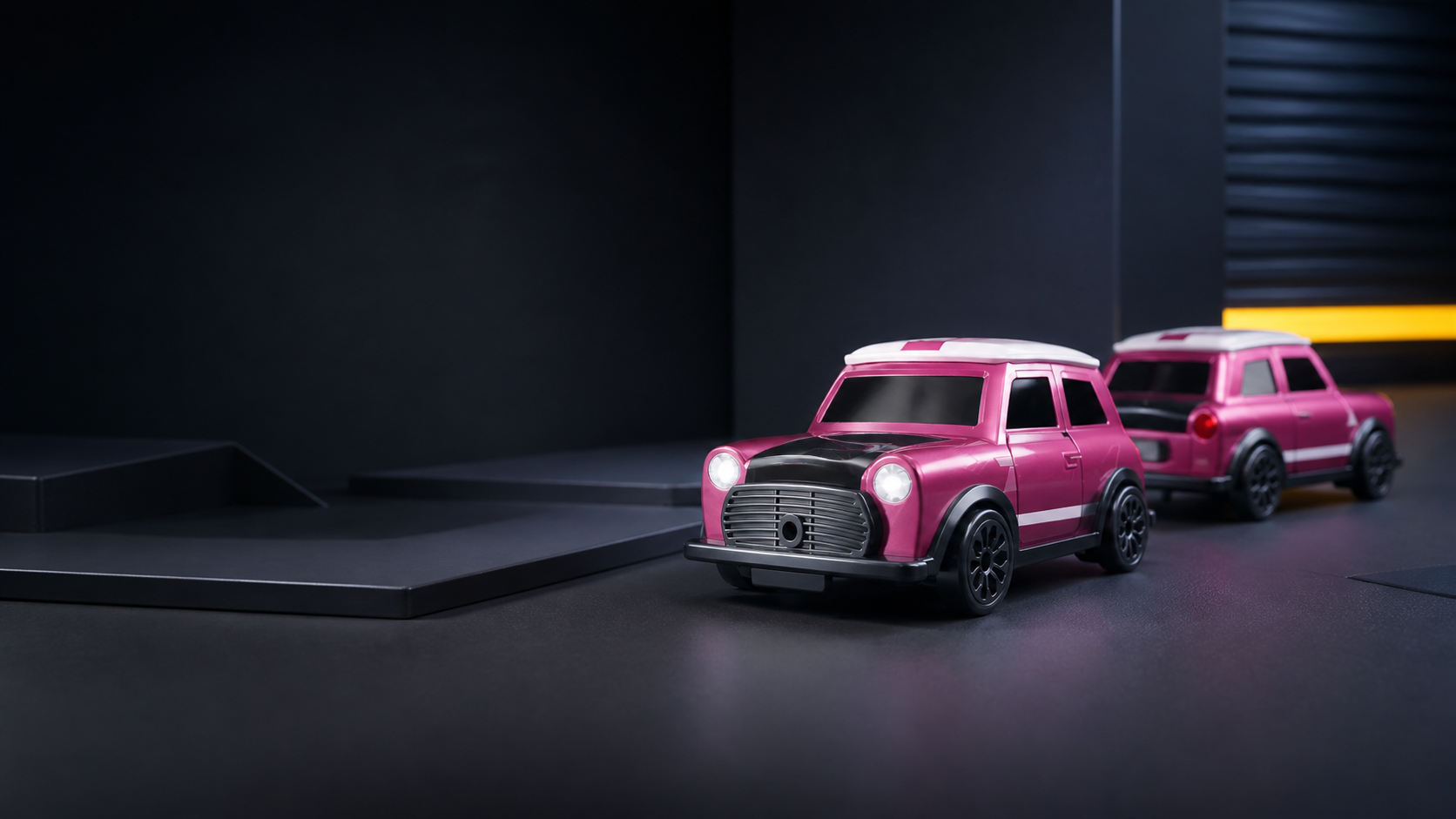
Approve an RC vehicle sample for a pilot run by gating it on documents, not on how good the sample feels in your hand: fix the pilot scope to one SKU and one destination, then clear two gates — a laboratory whose acceptance covers the safety rules that apply to that exact configuration, and a complete certificate file naming the certifier, test-record holder, and accepted lab. Anything you cannot produce a document for holds the pilot at no-go.
This page covers what a pilot run actually includes for a private-label RC car, the two evidence gates, the catalog fields that are still unconfirmed, and the decision table you use to pass, hold, or kill the run. It deliberately stays away from packaging engineering signals and from testing a marketing claim for a new control feature — those are separate decisions with their own evidence.
What a pilot run covers for one RC SKU
Scope the pilot to a single SKU, a single destination market, and a fixed window. A pilot is a closed, time-boxed release with defined success metrics and a built-in off-ramp — not an open-ended trial and not an MVP, which only asks whether demand exists at all. Keep it to one product or one account so the result is readable.
Anchor that scope to the catalog record you already hold, and label every field for what it is. A record like the 4.8V-2.4GHz-4WD Twisted Arm RC Stunt Car with Free Spinning Arm 360 Rotation Action is a catalog record only — it does not establish certification, age suitability, licensing, stock, or factory capacity. The same caution applies to every other stunt-car record in the range: name, material, packing, reference MOQ, units per carton, size, weight, and reference price each need reconfirmation against a current quote, a physical sample, and destination documents before they become pilot inputs.
Gate A: does the laboratory's acceptance actually cover this configuration?
Laboratory acceptance is specific to the relevant safety rules, and one laboratory may not cover every required test. That single sentence is the whole gate. According to the CPSC, a buyer should match the applicable requirements to the laboratory scope for the CarToyFactory configuration. If the lab named on the report is not accepted for each rule that applies to your specific RC configuration — 2.4GHz control, rechargeable pack, LED and sound modules, whatever is actually inside the unit — the report does not close the gate, no matter how clean the results look.
Ask the supplier to map each applicable requirement to the laboratory that tested it, in writing. A verbal 'our lab covers everything' is not a document. This is a document-review principle; it is not a claim that any particular model has been tested or certified.
Gate B: is the certificate file complete and does it match the sample?
The domestic manufacturer or importer is the certifier for a Children's Product Certificate, and the file has to identify the test-record holder, the manufacture details, the testing performed, and the accepted laboratory. According to the CPSC, a buyer should request the actual file and confirm responsible parties, dates, and model identity — not a screenshot of a logo, not the word 'CPC' in a catalog line, and not a certificate number pasted into a chat.
Then line the document up against the physical pilot sample: model identity, dates, and responsible parties must agree. If the sample in your hand carries a different model designation than the certificate, the gate stays shut until someone explains the difference in writing. A catalog listing is never equivalent to these records.
Open items to close before you commit tooling or volume
Every field marked 'not recorded' in the catalog snapshot is an open item, and each one is a reason to hold rather than guess. Material grade and color, packing format, current MOQ, units per carton, unit size, unit weight, and the current quote with its validity period all sit on this list. Treat reference prices as reference only — a catalog figure is not a quote.
Two more items belong here even though they are not catalog fields. Incoming resin inspection should verify supplier, grade, color, lot, packaging condition, and the required material documents before molding — so ask what that record looks like and who signs it. And if the pilot depends on a mold that you paid to develop, confirm the transfer terms: a mold cannot be assumed transferable merely because you paid a sample or development fee, and the transfer conditions should be written.
Worked example (illustrative, not a real shipment)
A private-label buyer books a pilot of roughly 300 units of one 2.4GHz stunt car into two destinations: a US e-commerce warehouse and one EU retail account. The EU carton needs an extra language panel and a different age warning, so the packing is not identical between the two legs — which means the packing spec has to be signed off per destination, not once.
The supplier sends a sample that drives well and a lab report naming a laboratory. Gate A fails: the report does not show acceptance covering every rule that applies to this configuration, so the buyer cannot tell which required tests are in scope. The run holds at no-go — not because the car is bad, but because the document does not answer the question. The buyer asks for the rule-to-lab mapping and the complete certificate file; the pilot clock does not start until both arrive.
Go/no-go decision table
| Gate A — laboratory scope | Pass: written mapping of each applicable requirement to an accepted laboratory for this configuration. Hold: no mapping, or the named lab's acceptance does not cover a required rule. |
|---|---|
| Gate B — certificate file | Pass: actual file naming certifier, test-record holder, manufacture, testing, and accepted laboratory, matching the sample's model identity and dates. Hold: logo, catalog mention, or a model mismatch. |
| Open catalog fields | Pass: material, packing, MOQ, units per carton, size, weight, and a current quote with validity all confirmed in writing. Hold: any field still 'not recorded'. |
| Packing per destination | Pass: separate packing spec signed off for each destination if cartons differ. Hold: one spec assumed to cover both legs. |
| Tooling and material records | Pass: written mold-transfer terms and an incoming-resin inspection record covering supplier, grade, color, lot, and documents. Hold: verbal assurances only. |
| Corrective action | Pass: any defect found in the pilot sample is traced to cause and verified effective. Hold: sorting the units is treated as the fix — sorting is containment, not root-cause correction. |
| Overall trigger | Any gate without a document holds the pilot at no-go until the document is produced. |
What changed in the last 14 days
None found for this product. No official change affecting CarToyFactory pilot runs or their documentation requirements was identified in the last 14 days from the sources reviewed, so this section stays empty rather than padded with market-size figures.
Where a rule change does land, write down which of the three states it is in: entered into force, actually applies to this product category, or the official text does not confirm the date. A trade-press headline year is not a legislative date, and 'applies from' is not the same as 'entered into force.'
What this shipment should do
Pull one file before you release the pilot: the mapping of applicable safety rules to an accepted laboratory, bound together with the complete certificate record for the exact model in the sample box. That single document set is what this shipment should carry, and it is what makes the go decision defensible six months later.
Keep it to one short compliance check — the rule-to-lab map plus the certificate file. Everything else on this page is commercial: quote validity, packing per destination, and transfer terms. Mixing those into a compliance conversation is how pilots stall.
FAQ
How long should an RC pilot run last?
Long enough to see reorder or sell-through behavior and short enough that it cannot drift into a permanent trial — a common practitioner range is roughly four to eight weeks. Lock the duration and the off-ramp before the first unit ships.
Can I approve the sample if the lab report is clean but the lab isn't listed for every rule?
No. Laboratory acceptance is specific to the relevant safety rules, and one lab may not cover every required test. Without a rule-to-lab mapping for your configuration, the clean results do not close the gate.
Is the word 'CPC' in a catalog listing enough to release the run?
No. The domestic manufacturer or importer is the certifier, and the file must identify the test-record holder, manufacture, testing, and accepted laboratory. A catalog mention is not equivalent to those records.
What if the certificate names a different model than my sample?
Hold. Model identity, dates, and responsible parties have to agree between the document and the physical sample, or the certificate does not cover what you are about to order.
Do I need a paid pilot?
Not necessarily. Free or low-commitment pilots are reasonable while the problem is still being validated; milestone-based payments start to matter when you are buying tooling, volume inventory, or a supplier's dedicated capacity.
How do I close a defect found in the pilot sample?
Require corrective and preventive action that addresses the cause of the defect and verifies effectiveness. Sorting the affected units is containment only — it does not correct the cause, and it cannot be the closing document.
Sources
Request a Quote
Send the SKU, destination market, and the documents you already have.