Approve an RC body color only after the physical sample meets the agreed written specification and design requirements under recorded lighting conditions; then identify and retain it as the production reference. Digital artwork sets the color direction, not final acceptance. For buyers deciding how to approve an RC vehicle sample, the practical outcome is a signed physical color standard, a documented comparison method, and a release decision that separates color approval from any unresolved fit, function, finish, or packaging checks.
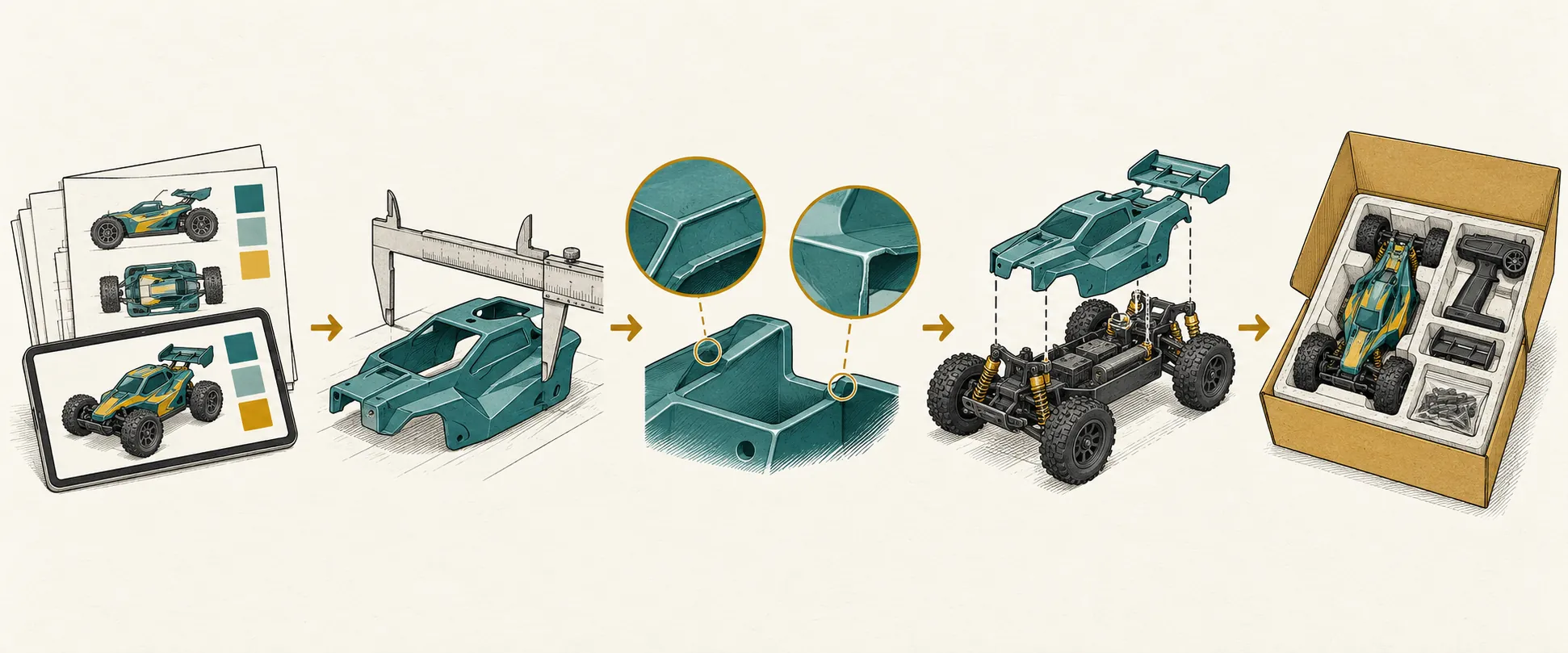
What must be defined before the supplier makes a color sample?
Define the colored surfaces, actual material construction, finish, and acceptance method before sampling; a color name or screen image leaves too much open to interpretation.
Mark the body areas on revision-controlled artwork: main panels, roof, bumpers, trim, window surrounds, and logos where applicable. Identify which areas must match each other and which are intentionally different. Specify whether approval covers the shell alone, the assembled vehicle, or both.
Request the substrate material and resin grade, colorant or coating identification, surface texture, and any clear coat or backing layer. Record the intended viewing side. Where color is viewed through a transparent shell, include the shell and backing in the sample construction rather than approving a separate paint swatch alone.
Keep the digital file name, revision, color values, and color profile where available. Use them to communicate design intent. If a physical brand swatch or other target exists, identify that object separately. If the project starts with digital artwork only, the buyer must select and approve a physical color result before it becomes the production standard.
Use a physical reference and a defined comparison procedure rather than treating a monitor image as the acceptance standard. This is a practical plastics color-control approach; see X-Rite plastics guidance. Keep the same resin grade, surface finish, and lighting conditions in the comparison.
Which lighting conditions should the color approval record specify?
| Primary light source | Record the light-booth setting or lamp identification and the illuminant it is intended to provide. Do not rely on descriptions such as “office light” or “daylight” alone. |
|---|---|
| Additional viewing condition | Agree on any secondary retail or indoor lighting condition and whether it is an acceptance requirement or an informational observation. |
| Light level and setup | Record the agreed booth setting or measured light level where used, along with sample position and distance. Repeat those conditions for subsequent comparisons. |
| Ambient light and background | Use an agreed neutral background and control stray light from windows or other lamps. Record the setup so it can be reproduced. |
| Viewing side and orientation | Identify the exterior viewing side, panel location, and viewing angles. For metallic or pearlescent finishes, compare the agreed range of orientations rather than one flattering angle. |
| Sample presentation | Record whether the shell is loose or installed, its backing, and whether removable protective film is present. Compare equivalent presentations. |
| Instrument method, if used | Agree on the instrument setup, measurement locations, backing, color-difference formula, and acceptance limit. Keep measurement conditions consistent between target and sample. |
What should the first RC vehicle sample inspection compare?
| Color and panel consistency | Compare each identified area with the physical target under the agreed lights. Record hue, lightness, saturation, and visible panel-to-panel differences. A mismatch under a required condition means correction or an explicitly authorized specification change before color release. |
|---|---|
| Material and construction | Compare the declared substrate, resin grade, colorant or coating, and backing with the specification and sample build record. Appearance alone cannot verify material grade. Resolve a construction difference before accepting the sample as representative. |
| Finish and graphics | Inspect agreed gloss or texture, coverage, streaks, overspray, specks, masking edges, logo color, and graphic position. Record the defect location and its acceptance criterion; request correction where the agreed finish is not met. |
| Dimensions and fit | Measure drawing-defined body dimensions and mounting locations. Install the shell and check attachment, alignment, and clearance around moving parts. Record actual measurements rather than a general “looks correct.” |
| Function with the body installed | Operate the specified drive, steering, and other agreed functions. Check for body interference, rubbing, or restricted access to intended controls and compartments. A functional discrepancy remains open even if color is acceptable. |
| Agreed packaging | Compare packaging artwork, product identification, color depiction, contents, and body protection with the agreed packaging specification. Separate a packaging revision from the body-color decision so neither is silently treated as approved. |
What should a reusable RC body color approval record contain?
| Project and revision identity | Enter the RC model or project, body part identification, artwork and drawing revisions, sample identification, sample build date, and inspection date. |
|---|---|
| Customization scope | Identify the surfaces, colors, graphics, finish, and assembled or loose-body presentation covered by this approval. List any exclusions. |
| Specified target | Reference the written specification, physical color target if one exists, digital artwork revision, material construction, and agreed acceptance criteria. |
| Comparison conditions | Attach or reference the lighting record, viewing orientation, backing, and instrument method where used. |
| Observed result | Record findings by panel and inspection item, including actual dimensions or instrument readings where taken. Keep visual findings distinct from measured results. |
| Decision and conditions | Select approved, conditional approval, or revise and resubmit. State separately whether color is approved and whether production is authorized. Define what a conditional approval permits and prohibits. |
| Responsible approval | Record the authorized buyer approver’s name, role, signature or controlled electronic authorization, and date. Identify the supplier representative acknowledging the approved revision. |
| Discrepancy and closure | Assign each open issue an owner, required correction, due date, and verification method. Record the replacement sample or evidence reviewed, closure decision, closing approver, and closure date. |
| Retained reference | After approval, enter the master sample identification, custody locations, matched counterpart references, and linked change record. |
What happens if the sample matches under one light but not another?
Withhold color release if the sample fails a lighting condition that the buyer and supplier agreed was required for acceptance.
For a hypothetical check, assume a candidate blue body matches the target under the primary booth setting but appears visibly greener under the required secondary setting. Record both observations and the affected panel. First confirm that the target and candidate were compared with equivalent backing, orientation, and lighting; a setup difference should be corrected before judging the color.
If the difference remains outside the agreed acceptance criteria, assign a corrective action and request a revised physical sample. Repeat the required comparisons, retain the rejected sample’s identity in the record, and close the issue only after authorized review. If the buyer elects to accept the difference, document that as a revision to the requirement—not as proof that the original requirement was met.
Agree on project-specific acceptance criteria before making the decision. There is no universal Delta E threshold that this workflow can supply. An instrumental color result also does not replace checks for gloss, texture, graphics, or appearance at the agreed viewing angles.
How does an accepted sample become the physical master?
An accepted sample becomes the physical master only after the authorized buyer identifies the exact object and approves the specification revision it represents.
Label or tag it without altering the inspection surfaces. Include the project, sample identification, material construction, finish, revision, approval date, and approver. Keep signed physical references with both parties and document that their appearances were compared and accepted; two separately prepared samples should not be assumed identical.
Store the references protected from light, heat, contamination, and abrasion, and record their custody locations. Link supporting photographs to the sample identity, but do not use photographs as substitutes for physical color comparison. A missing photograph alone does not invalidate an otherwise documented review.
This custody arrangement is a recommended purchasing control supporting a physical-reference workflow, not a certification requirement. For the underlying plastics color-management context, see X-Rite plastics guidance.
Which changes require reapproval before production release?
Require a revised physical color sample before accepting changes to resin grade, colorant or masterbatch, coating or backing, or surface finish; also review process changes that could alter appearance.
Record what changed, why, the affected parts and revisions, and the evidence needed to accept the change. If the lighting acceptance conditions change, reassess the physical target and sample under the revised conditions. Do not silently replace the original viewing requirement.
Authorize production against an identified approved sample, the current written specification, the lighting and comparison method, and resolved or explicitly controlled discrepancies. A color-only approval should not be read as authorization for unresolved assembly or packaging details.
Bulk inspection is the next stage: compare production observations with the specification, retained master, and authorized change records. The master complements those records; it is not the only valid inspection basis. A signed reference supports traceability, but it does not guarantee production conformity or reveal an undisclosed material change by itself.