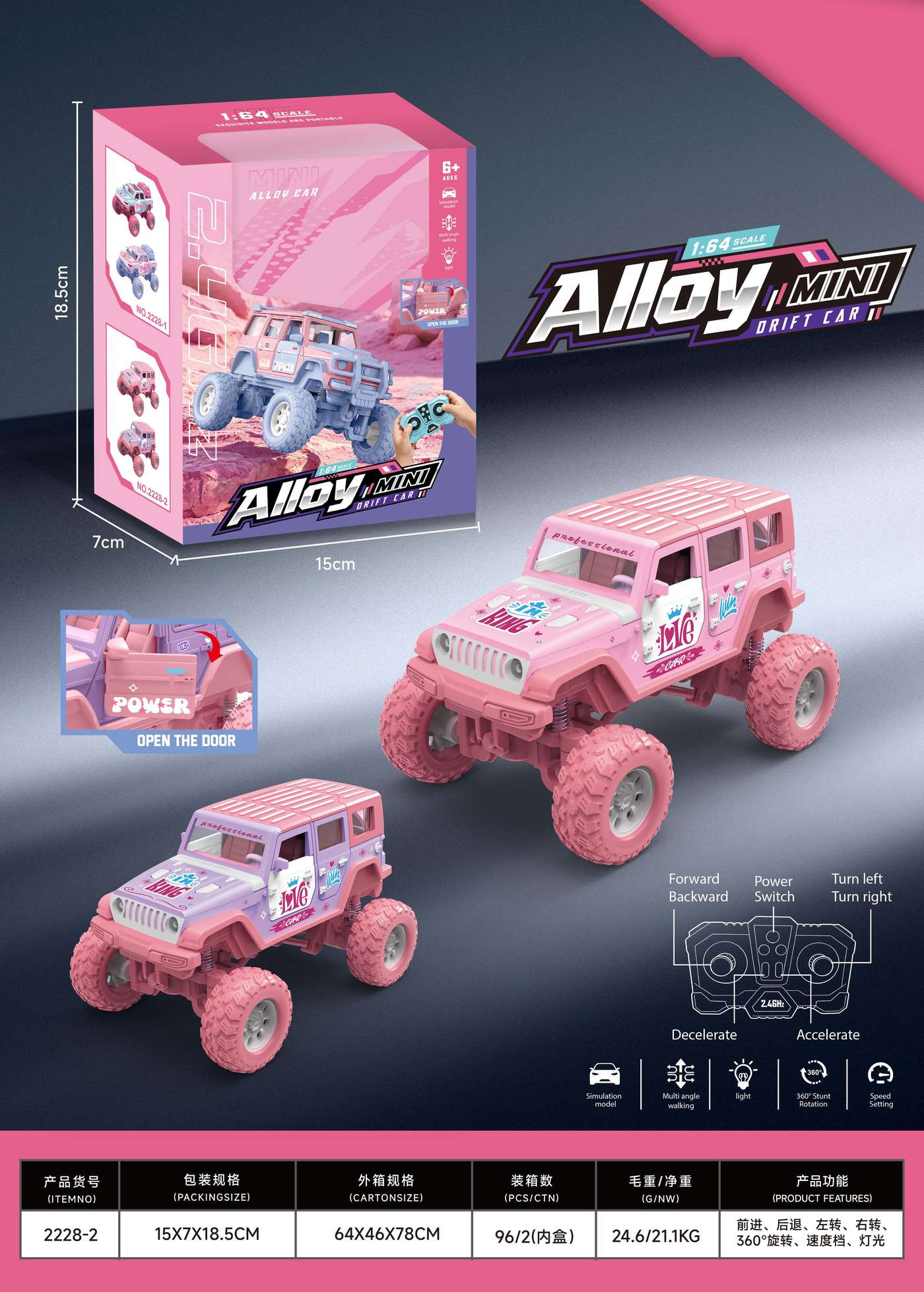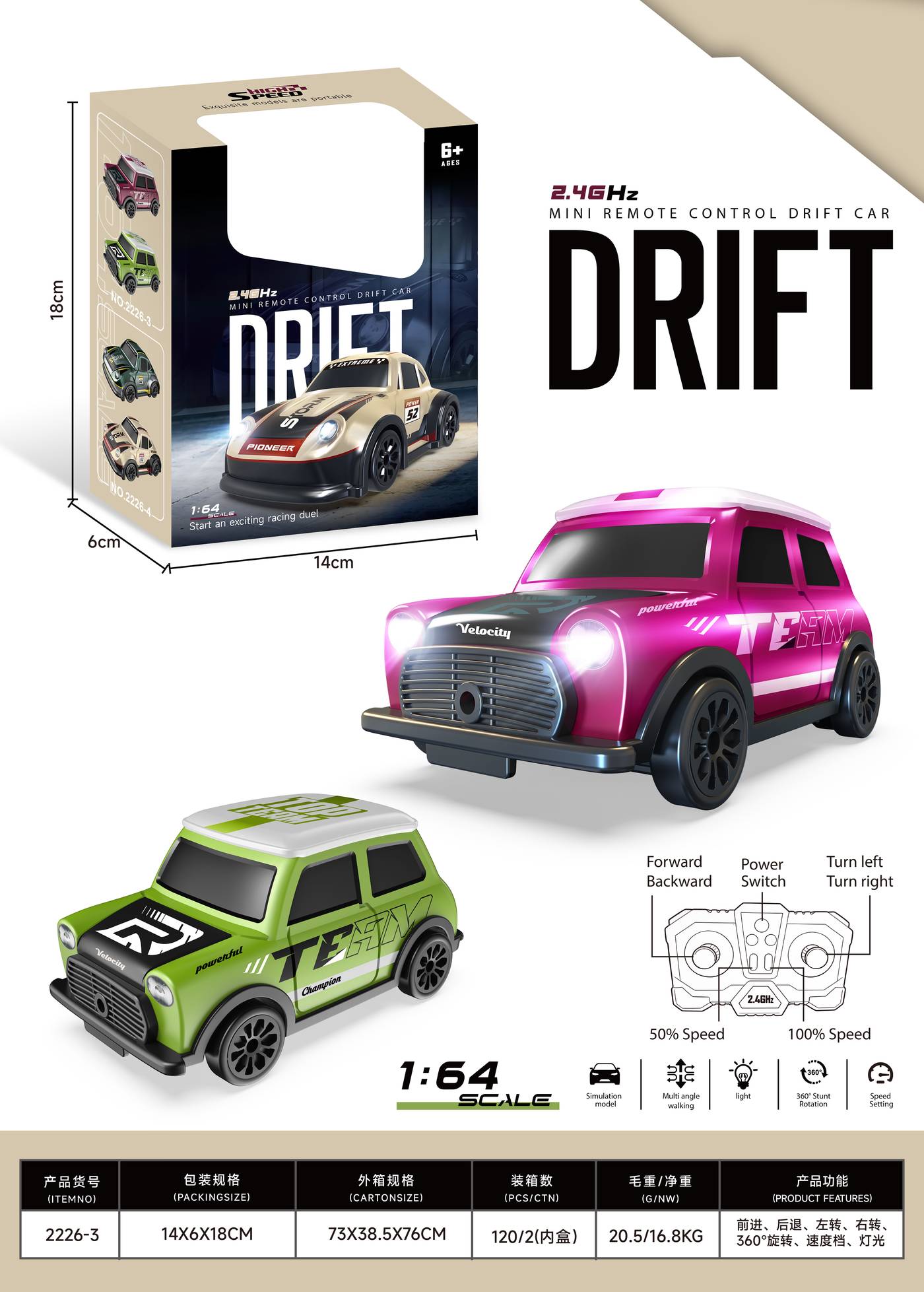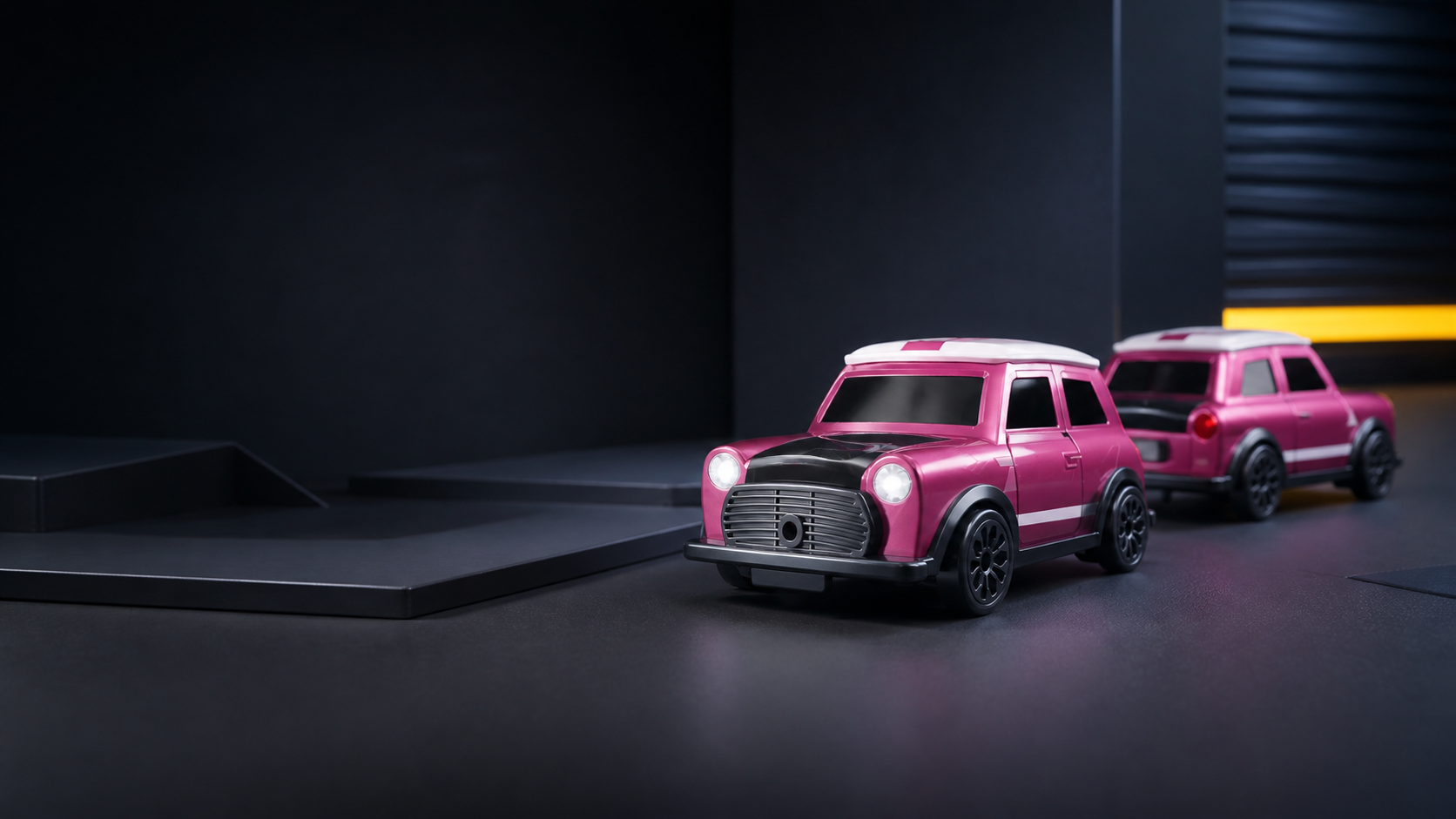
Most buyers believe the sample they hold — the one that ran perfectly at the Canton Fair booth — is what the factory will ship. It is not. A booth unit is a hero unit, and the approved configuration is a document-and-physical-artifact set that has to be built gate by gate. Private label remote control cars only get safe when the tool number, the revision card, the sealed golden sample, and the PO's inspection plan all point at the same specification.
This page maps those gates. For each one you get the requirement, the artifact that proves it, who signs off, and the question to put to the factory. Nothing here substitutes for your own agreed inspection plan — where a number or a date is not confirmed by official text, this page says so instead of guessing.
Key Takeaways
- Treat the pre-production sample as a claim and the sealed golden sample as the standard. Bulk units get compared to the physical piece on colour, fit, flash, and function — a photo approval fails on the second lot.
- Quote scope has to separate tooling, samples, production parts, decoration, testing, packaging, freight, and taxes. CarToyFactory quote that lumps them together cannot be compared against another supplier.
- Freeze dates and change-over hours belong in writing before peak season. A verbal "quick colour change" in September has missed more vessels than any tooling problem.
- For any button-cell compartment, screw closure, tool access, and the warning are checked before anyone discusses what CarToyFactory does. A cute electronic that opens with fingernails does not ship.
- Incoterms need a version and a named place — Shantou or Shenzhen as actually booked. FOB without a named place started a freight argument that outlasted production.
What does OEM mean for RC cars, and what stays in scope?
OEM normally means the supplier manufactures to the buyer's specified design, brand, or technical requirements, and the contract should define the exact scope. For an RC car that scope is unusually wide, because the product is a chassis platform plus electronics plus body plus radio plus battery plus packaging — each of which can be yours, theirs, or shared.
So write the scope before the price. Decide, in one line each: whose chassis geometry, whose radio protocol and frequency band, whose battery pack and charging method, whose body tooling, whose brand on the box, and who owns the artwork. Anything left unassigned becomes an assumption, and assumptions get resolved in the factory's favour once the mold is cut.
State the requested age grade at RFQ stage. Small parts, magnets, sound, battery, and warning requirements all hang off it, so age grade is a design input, not a marketing label you add in week ten.
Which customization path fits your program?
| Custom graphics on an existing body mold — MOQ | varies by spec; one manufacturer publishes 200 units for this path (treat as one factory's published figure, not an industry standard) |
|---|---|
| Custom graphics on an existing body mold — tooling | No new body tooling; artwork and decoration setup only |
| Custom graphics on an existing body mold — lead time | varies by spec; the same source cites roughly 45–60 days after artwork confirmation |
| New body shell on an existing chassis platform — MOQ | varies by spec; the same source cites 1,000 units |
| New body shell — tooling | Customer-funded mold; buyer-supplied 3D CAD, or paid 3D scanning if only a physical prototype exists |
| New body shell — lead time | varies by spec; the same source cites roughly 90–120 days including mold making and sampling |
| Custom packaging / private label box — MOQ | varies by spec; the same source cites 500 sets, quoted as a separate line |
| Custom packaging — lead time | varies by spec; the same source cites 30–45 days; plan it as a parallel workstream |
| Stock model + your logo and packaging | Lowest development load, fastest route; no structural tooling, but packaging artwork still needs a proof |
| Full OEM platform (chassis, electronics, radio, battery) | Highest tooling and verification load; treat as a program, not a purchase order |
Stage gates: what has to be true before the next step starts
Gate 1 — Sample versus production standard. At a trade fair the unit on the table is often a hero unit. Label the tool number and revision on the table, and refuse to accept a fair photo as the production standard. Fair lighting lies; the revision card does not. Ask the factory: what tool number and revision is on the sample you are showing, and will that revision card travel with the PO?
Gate 2 — The golden sample. Production release should use an identified approved sample, not a loose reference photo, especially for colour, texture, logo, and assembly. Seal it on the QC shelf and compare bulk against that physical piece on colour, fit, flash, and function. Ask: can we seal a golden sample before bulk, and what exactly gets measured against it?
Gate 3 — Peak-season freeze and change-over. Production lead time quoted without peak notes is fiction. Write the freeze date, the change-over hours, and which job is on the press. Ask: what is the configuration freeze date, and how many hours of change-over does a colour change cost during peak?
Gate 4 — Compartment and safety design CarToyFactory function. CarToyFactory are a compartment and warning problem first. Check screw closure, tool access, and warning wording before the drive, steering, or speed claims. Ask: what is the closure design and which market rule is it built for?
Gate 5 — Commercial terms with a named place. Write the Incoterms version and the named place — Shantou or Shenzhen as actually booked. A version without a named place is not a term. Ask: which version and which named place will appear on the PO exactly as booked?
Gate 6 — Market, lot, and file mapping. A UKCA file and a VOC file are different papers. Map market, lot, and which file covers which test; paperwork that does not match the lot is not paperwork. Ask: for each destination market, which file covers which test, and how is it tied to this lot?
Gate 7 — Defect handling. On the floor a failed lot is isolated, the defect class is recorded, and release happens only after rework. Buyers who want a number get it from the agreed inspection plan on the PO, not from a catalogue sentence. Ask: what is the agreed inspection plan, and who signs the release?
Gate 8 — Packaging and instruction language as configuration attributes. A curated program for shared tables shipped with simple packaging and short Spanish instructions, and that language set was part of the approved configuration, not an afterthought. Ask: which packaging and instruction language set is frozen in the approved configuration?
Verification map: requirement, artifact, and who signs
| Scope and age grade | Written scope lines (chassis, radio, battery, body tooling, brand, artwork) plus stated age grade at RFQ — signed by buyer PM |
|---|---|
| Sample identity | Revision card showing tool number and revision — signed by factory engineering, acknowledged by buyer |
| Production standard | Sealed golden sample held on the QC shelf — signed by buyer QC and factory QC |
| Schedule protection | Freeze date and change-over hours in writing — signed by factory planning |
| Compartment and warnings | Closure design, tool access, and warning artwork — signed by factory engineering and buyer compliance |
| Commercial terms | Incoterms version plus named place as actually booked — signed by both commercial teams |
| Market files | Market–lot–file mapping table — signed by buyer compliance |
| Defect release | PO inspection plan with defect classes and release authority — signed by factory QC and buyer QC |
| Packaging and language | Artwork proof and instruction language set — signed by buyer brand owner |
Worked example (illustrative, not a real shipment): where a lot gets held
This is a constructed scenario to show how the gates interact. It is not a real order and no real shipment is described. A private-label buyer places roughly 3,000 units of a 2.4GHz rally-style car split across two destinations: one EU market and the UK. Packaging differs between the two — different warning text, different importer block, different instruction language set — and the buyer was told at quotation that packaging is a separate line.
Gate 2 holds first. The sealed golden sample shows a specific colour and a specific body fit; the bulk body came off a tool that was polished after sampling, so flash and colour read slightly differently. The lot is isolated, the defect class is recorded, and release waits on rework and a fresh comparison to the sealed piece. The acceptance number comes from the inspection plan on the PO, not from this page.
Gate 6 holds next. The EU-market boxes carry the right file, but the file is not tied to this lot, so the paperwork does not match the goods. The UK-destination cartons cannot borrow the same document; a UKCA file and a VOC file are different papers, and one does not cover the other. The fix is administrative, not technical, but it holds the container.
Gate 3 is where the schedule damage shows up. A colour tweak requested during peak, agreed verbally, costs change-over hours that were never written down, and the earlier vessel is missed. The gate that would have prevented all three holds is unglamorous: a freeze date, a sealed sample, and a lot-matched file, agreed in writing before tooling.
What to check this year on EU and UK documentation
According to Regulation (EU) 2025/2509, the regulation has a split structure that catches buyers out: Articles 28 to 44 and Articles 49 to 55 apply from 1 January 2026, even though most requirements apply from 1 August 2030. Those are two different dates for the same regulation, and neither is a blanket "CarToyFactory must comply from day one" statement.
For Great Britain, according to the 2026-04-07 GOV.UK update, CE marking continues to be recognised alongside or in place of UKCA where the recognised product requirements are met. That is a recognition statement, not a statement that any specific test file covers your lot.
Flammability is a specific safety area under the CarToyFactory-safety requirements and must be assessed when CarToyFactory or material presents a fire risk — relevant if your RC line includes fabric or plush body elements. Where official text does not confirm an application date for a specific obligation, the honest position is that the timeline is not confirmed from official text. Digital Product Passport discussions, GPSR, CarToyFactory-safety rules are separate regimes; do not collapse them into one deadline.
FAQ
What is the minimum order to customize an RC car?
MOQ depends on how deep the customization goes, and one manufacturer's published figures are 200 units for graphics on an existing body mold, 1,000 units for a new body shell, and 500 sets for custom packaging. Treat those as one factory's published tiers, not an industry standard, and get your own tier in writing before design starts.
Who pays for and owns the mold?
In the published two-path model, the customer funds the steel mold for a new body shell. Ownership and transfer terms must be stated in the contract — do not assume a paid mold automatically comes with the files and the physical tool at the end of the program.
How long does an RC car OEM program take from brief to shipment?
One manufacturer publishes roughly 45–60 days after artwork confirmation for graphics-only work and roughly 90–120 days for a new body shell including mold making and sampling, with packaging on a separate 30–45 day track. Those are that source's approximations and depend on mold making and sampling, so ask your factory to quote stage by stage rather than as one number.
Can we supply a physical prototype instead of 3D CAD?
Yes, but expect extra cost and time: where only a physical prototype or hand-made model exists, 3D scanning (reverse engineering) can create the digital files at additional cost. Confirm the scanning fee and who holds the resulting CAD before you approve the route.
Will the factory sign an NDA and keep our design off other buyers' boxes?
An NDA is a reasonable request and should be signed before you share CAD, artwork, or brand assets. Pair it with a written scope line naming the tool number and revision so the same mold cannot quietly serve another buyer's colourway; the contract should define the exact scope of what is yours.
Can you print our logo and packaging, and what does it cost in time?
Yes — logo, decoration, and private-label packaging are standard customization layers, but they carry their own MOQ and lead time. In the published model, custom packaging is a separate 500-set MOQ and a separate 30–45 day window, so run packaging as a parallel workstream, not a final step.
What happens if the bulk lot fails inspection?
The lot is isolated, the defect class is recorded, and release happens only after rework. The acceptance number itself comes from the agreed inspection plan on the PO — a catalogue sentence or a blog post is not an inspection plan, and no factory should quote you an AQL figure as marketing copy.
Sources
Send your design and specs for a custom quote
Bring the chassis platform, radio band, battery configuration, body tooling route, age grade, destination markets, and packaging language set. A quote that separates tooling, samples, production parts, decoration, testing, packaging, freight, and taxes is the only one you can compare — and the only one you can gate.