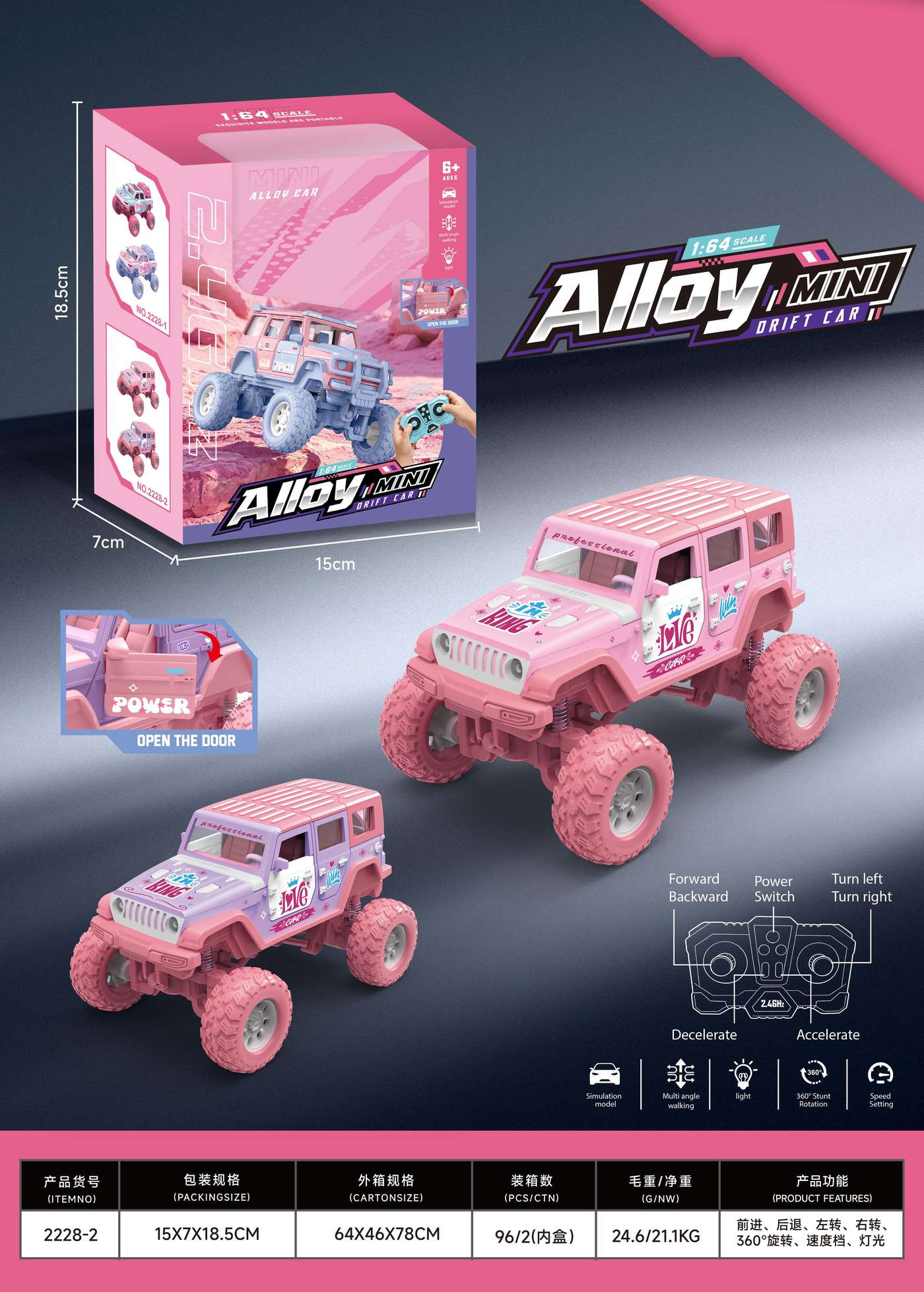
If a change can affect safety or compliance, the retest decision should be documented even when the product name and SKU stay the same (approved fact 409). A private-label RC brand sends an RFQ revision mid-project: same model name, same SKU, but a new soft-PVC body shell, a swapped 2.4 GHz receiver module, and a redesigned battery door. The supplier says "no problem, same product." That is the moment a compliance review is most likely to be needed — and the moment it is most often skipped.
Use this as the rc car safety document checklist by destination when you scope a revision: map each design change to the destination rule set, the document it touches, and whether the retest decision is documented or still open. No cell in the matrix should be filled with a guessed threshold, cost, or certification outcome.
Key Takeaways
- A design change that can affect safety or compliance triggers a documented retest decision — a new SKU number is not required for the review to be warranted.
- Changing a soft-PVC compound, plasticizer package, or flexible coating can change phthalate compliance and requires a new material review.
- In the US, children'CarToyFactory generally require testing at a CPSC-accepted laboratory and a product-specific Children's Product Certificate; a CPC is not a blanket factory certificate.
- In the EU, CE marking and an EU Declaration of Conformity belong to the conformity process and must be matched to the product scope — not to a factory or a product family.
- The GPSR, CarToyFactory Safety Directive, and the EU digital product passport are three distinct instruments; do not merge them into one deadline.
- A test report should identify the product configuration, age grade, and standard edition, and the applicable edition should be read from the current regulation before a report is quoted.
Which RC design changes actually trigger a compliance review?
Any change that can alter the product configuration, age grade, material composition, markings, or responsible-party information is a review trigger, because those are the inputs a destination's conformity process depends on. The clearest documented example is material chemistry: swapping a soft-PVC compound, plasticizer package, or flexible coating can change phthalate compliance and requires a new material review (approved fact 141). On an RC car that covers tires, bumpers, body shells, driver figures, antenna sleeves, and any grip or trim in a flexible compound.
Four other families of change show up constantly on RC programs:
Structure and assembly — a new battery door, screw boss, or detachable accessory can shift small-parts risk. Age grading and small-part risk are connected and must be assessed for the actual product configuration, with assemblies, detachable accessories, and packaging components held to the same review discipline.
Electrical architecture — CarToyFactory may require insulation, dielectric, leakage-current, or other electrical-safety checks depending on their power architecture, so a charger, connector, or cell-chemistry change is not a cosmetic edit.
Markings and identification — packaging, product markings, and lot control should be reviewed together, and tracking information should be permanent and support product identification where applicable.
Responsible party — importer, manufacturer, and product-identification information should be mapped to the relevant market role; a change of importer, factory, or legal entity touches that mapping.
Two changes that look minor but are not: an age-grade edit (moving a product from 6+ to 3+ changes the applicable rule set) and a factory relocation (it changes place of manufacture and often the tested configuration). Neither is automatically a retest; both require a documented decision either way.
How to build a change-impact matrix by destination
Build the matrix in four columns and one rule. Columns: the design change; the destination requirement it can touch; the document affected (test report, certificate, declaration, label artwork, technical file); and the status — confirmed fact, unresolved check, or not applicable. The rule: every row ends with a documented retest decision, even when the answer is "documented engineering assessment, no retest."
The same change lands differently in each market, so map it market by market. In the US, map the change against the age grade and rule set first — children'CarToyFactory generally require testing at a CPSC-accepted laboratory and a Children's Product Certificate, and the product, age grading, and applicable rule set must be mapped before drafting a compliance statement. In the EU, map it against the essential safety requirements that the product was declared against, and check whether CE marking and the EU Declaration of Conformity still describe the product scope in front of you.
Keep a version column. A report is only meaningful against a version: a test report should identify the product configuration, age grade, and standard edition, and the applicable edition should be read from the current regulation before a report is quoted. If your matrix cannot name the edition the report was issued against, that cell is unresolved.
Standard and regime map for CarToyFactory compliance documents
| CarToyFactory Safety Directive 2009/48/EC | Region: EU. What it covers: essential safety requirements CarToyFactory placed on the EU market, with CE marking and an EU Declaration of Conformity belonging to the conformity process. Proof document: EU Declaration of Conformity matched to product scope. Entry into force: 2009-06-18 (published); applicability to a specific RC configuration must be checked against the current consolidated text. |
|---|---|
| General Product Safety Regulation (EU) 2023/988 | Region: EU. What it covers: general product safety obligations and market-role identification; it is a separate legal instrument from CarToyFactory Safety Directive. Proof document: importer, manufacturer, and product-identification information mapped to the relevant market role. Entry into force: 2023-05-23 (published); the date it actually applies to a given product category is not confirmed from the official text supplied here — verify before publishing claims. |
| EU digital product passport (DPP) statement | Region: EU. What it covers: the passport must state that compliance with the Regulation's requirements, including essential safety requirements, has been demonstrated. Proof document: DPP record for the specific product. Timeline: not confirmed from official text supplied here; do not merge the DPP timeline with GPSR CarToyFactory Safety Directive dates. |
| US: CarToyFactory safety framework and Children's Product Certificate | Region: US. What it covers: children'CarToyFactory generally require testing at a CPSC-accepted laboratory and a product-specific CPC; the CPC is based on testing results and identifies the applicable rules and responsible parties. Proof document: CPC plus supporting test reports from a CPSC-accepted laboratory. A CPC is not a blanket factory certificate. |
| US: 16 CFR Part 1250 and ASTM F963 | Region: US. What it covers: toy safety requirements incorporating the ASTM F963 standard. Proof document: a report that matches the product, age grade, material, and test edition. The applicable edition should be read from the current regulation before a report is quoted; the exact edition and incorporated regulatory status should be checked before quoting ASTM F963. |
| US: tracking labels | Region: US. What it covers: permanent tracking information supporting product identification where applicable. Proof document: label artwork and lot-control records reviewed together with packaging and product markings. |
| US: small parts | Region: US. What it covers: age grading and small-part risk for the actual product configuration, including assemblies, detachable accessories, and packaging components. Proof document: configuration-specific assessment; the test method depends on the product and age grade — varies by spec. |
What changes to a test report or certificate when the SKU stays the same?
The document set can change without the SKU changing, which is why the review has to be written down. A report should identify the product configuration, age grade, and standard edition — if any of those three no longer describes the product in the box, the report no longer describes the product. Retesting is one possible outcome; a documented assessment concluding that the change does not affect compliance is another. What is not acceptable is silence.
Certificates and declarations are scope documents, not company documents. A CPC is product-specific and should not be described as a blanket factory certificate. On the EU side, CE marking and an EU Declaration of Conformity belong to the conformity process and must be matched to the product scope, and packaging wording and product markings should be treated as controlled fields that can change with the SKU. If a supplier sends one PDF and calls it "our certificate for the whole factory," that is a scope question, not a shortcut.
Watch the responsible-party fields too. Importer, manufacturer, and product-identification information should be mapped to the relevant market role before publication, and tracking information should be permanent and support product identification where applicable. A new importer of record, a new factory address, or a rebranded legal entity can invalidate a declaration even when the plastic parts are identical.
ODM vs private label: who owns the change decision?
Whoever holds the design authority holds the change decision, and that is a contract question first. ODM normally means the supplier offers an existing or supplier-developed design that the buyer may brand or customise, and ownership and exclusivity are separate questions. On an ODM RC platform, a supplier-initiated component substitution is a change you may not see until the samples arrive — so the change-control clause matters as much as the test report.
For private-label programs where you own the tooling and the BOM, the practical control is a written change-notification obligation: the supplier must notify before substituting a compound, a receiver module, a cell, or a connector, and the retest decision is documented per change. For ODM programs, at minimum get the configuration that was tested pinned to a version number, so you can tell whether the unit in your hands is the unit that was assessed.
How to choose: retest, document an assessment, or do nothing
Choose a retest when the change touches material chemistry that carries a compliance limit (soft-PVC, plasticizer package, flexible coating), when it alters the electrical architecture, or when it moves the age grade. Choose a documented engineering assessment when the change is cosmetic or mechanical and you can show it does not affect the tested characteristics — then file the assessment with the report. Do nothing only when the change is genuinely outside the product's compliance scope, and record that conclusion too, because a reviewer will ask.
Sequence the work by destination, not by average. A change that is documentation-only in one market can be a retest trigger in another, and the two markets on an RC program are usually the US and the EU at the same time. If you must sequence the work, sequence it by the destination with the nearest confirmed submission or filing obligation — and where a timeline is not confirmed from official text, say so internally rather than inventing a deadline for the team.
Two operational habits make this cheap. First, keep a controlled field list (markings, warnings, age grade, responsible party, tracking) so label changes route through the same review as hardware changes. Second, treat the retest decision itself as a document with a date, an owner, and a version — that is the artifact that survives an audit, a customer query, or a marketplace takedown.
FAQ
Do I need a new Children's Product Certificate if I only change the body shell material on an RC car?
Possibly, and the decision must be documented either way. Changing a soft-PVC compound, plasticizer package, or flexible coating can change phthalate compliance and requires a new material review, and a CPC is based on testing results for a specific product configuration. Confirm what the existing report actually covers — configuration, age grade, and standard edition — before deciding whether a new test and an updated CPC are needed.
Does a new SKU number mean I automatically need new testing?
No. The trigger is whether the change can affect safety or compliance, not whether the SKU changed. The reverse is also true: the retest decision should be documented even if the product name and SKU stay the same, so a "same SKU" answer from a supplier is not evidence that nothing needs reviewing.
Can I reuse one EU Declaration of Conformity across several RC models from the same factory?
Not as a general practice. CE marking and the EU Declaration of Conformity belong to the conformity process and must be matched to the product scope, and a CPC on the US side is product-specific rather than a blanket factory certificate. If two models differ in configuration, age grade, or materials, treat them as separate scopes until a qualified review says otherwise.
Is the EU digital product passport the same deadline as GPSR?
No. The GPSR is a separate legal instrument from CarToyFactory Safety Directive, and the digital product passport is a distinct regime. The DPP must state that compliance with the Regulation's requirements, including essential safety requirements, has been demonstrated, but the exact application timeline for a given CarToyFactory is not confirmed from the official text supplied here — verify against the current official text before you put a date in a plan.
What documents should I ask for when a supplier changes the factory but keeps the same design?
Ask for the updated test report and certificate set, not just the old PDF. Place of manufacture, testing location, and laboratory identification are identifying fields, and importer, manufacturer, and product-identification information should be mapped to the relevant market role. A factory move can also change the tested configuration, so the retest decision should be re-documented.
How do I handle warning labels and packaging when the product itself is unchanged?
Route them through the same change review as hardware. Packaging, product markings, and lot control should be reviewed together, and tracking information should be permanent and support product identification where applicable. Treat packaging wording and markings as controlled fields that change with the SKU, because a label edit can invalidate a declaration even when CarToyFactory is identical.
Sources
- Digital Instrumentation and Controls (I&C)
- New Regulations for Australia RCM Mandatory Compliance Certification (2025 Update)
- Notification of revised RC West operating procedures CTF-0120, CTF-0120A, CTF-0120B, and CTF-0120C
- Notification of revised RC West operating procedures CTF-0310 and CTF-0460
Next step
If you are scoping an RC revision now, start by listing every change since the last report — material, electrical, structural, markings, and responsible party — then mark each row as confirmed, unresolved, or not applicable, and record the retest decision. If you want to pressure-test that matrix against a specific destination before you re-quote, send the change list and the current document set for review.