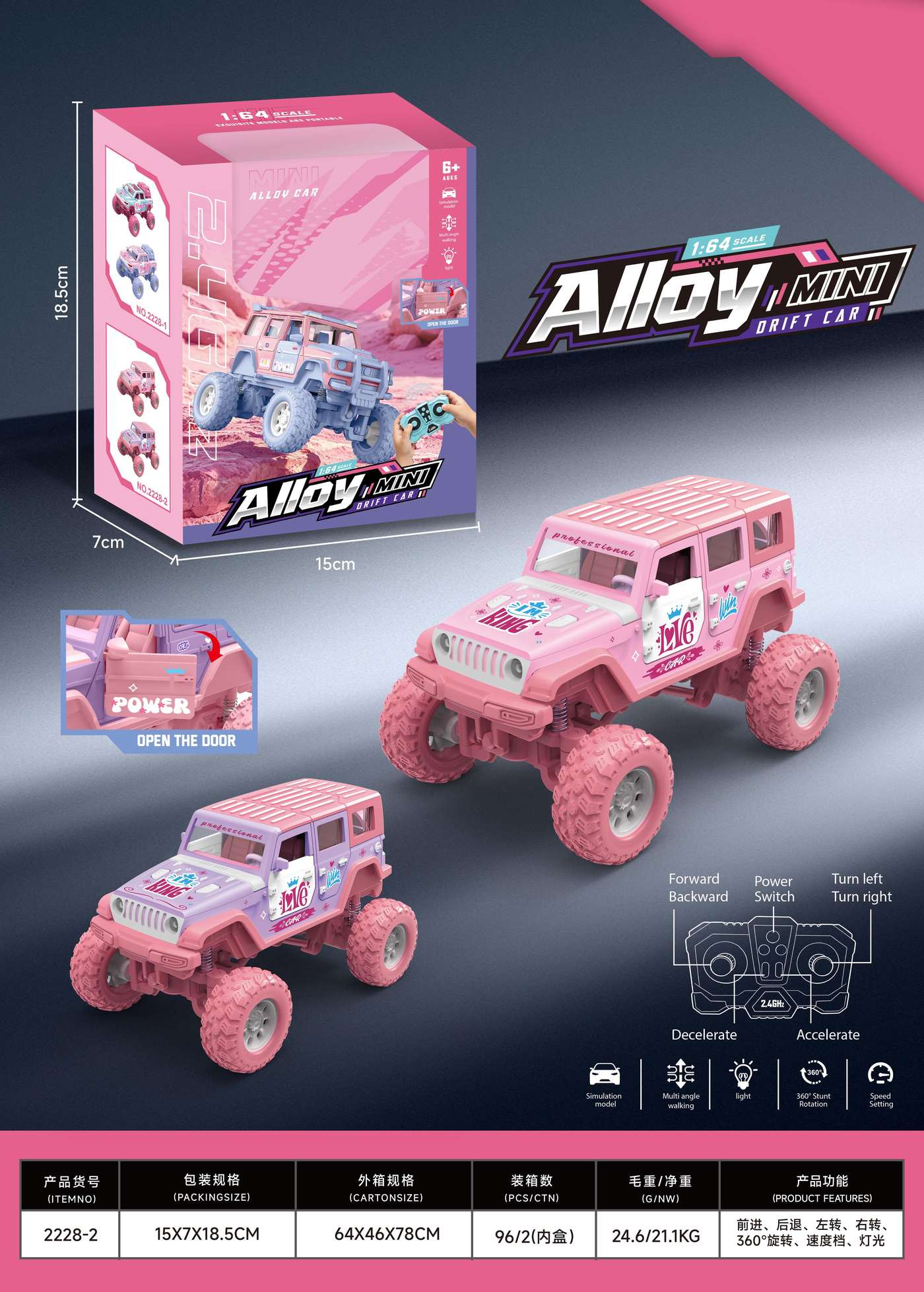
For private label RC vehicle range planning, the boundary is simple: a smooth-floor drift car can only be shortlisted once you have surface compatibility and turning behavior evidence, not a stunt claim in the product name. Catalog names say "360 Rolling Drift," "Double Sided," or "Twist Craweler"; those are marketing labels, not test results. Decide on two axes only — which floor the car will actually meet (polished concrete, sealed wood, P-tile, smooth garage floor) and whether the chassis holds a controllable slide on it. Lights and spray effects are decoration. This page maps those two axes into a checklist you can run against samples, so you know which SKUs earn a slot and which stay unverified.
Why do smooth-floor drift SKUs fail in real use?
The failure that kills a smooth-floor drift SKU is grip mismatch, not a dead motor. Drift depends on a consistent slip-to-grip ratio; on polished concrete or sealed wood the car slides readily, but on rough asphalt the same tyres wear fast and the grip curve shifts mid-run, so the car either bites and traction-rolls or spins with no recovery. In an assortment sold to mixed households, that means a car tuned for a track surface arrives on carpet or dusty garage floor and behaves like a different product. Ask the factory one direct question: which surface was the drift behavior validated on, and can they state the tyre compound and hardness range? If the answer is "any smooth floor," treat the claim as unverified and put the sample on your own floor before committing. Nothing in the current catalog record states material, packing, or test surface, so this check has to close before the shortlist does.
What to ask before the order
| Failure: car spins out instead of holding a slide | Ask: gyro fitted, and is gyro gain adjustable? Accept if: gyro is specified and gain is tunable. Walk away if: no gyro detail and no adjustment. |
|---|---|
| Failure: drifts on the sample floor, grabs on the buyer's floor | Ask: which surface was behavior validated on, and what tyre compound is fitted? Accept if: a named surface and a stated compound. Walk away if: "works on any smooth floor." |
| Failure: 360-spin or flip gimmick sold as drift capability | Ask: is the turning behavior a drift or a rotation trick? Accept if: the two are separated in the spec. Walk away if: the name is the only evidence. |
| Failure: coating or finish issue surfacing after import | Ask: what finish and paint system is used, and what documentation covers it? Accept if: finish is documented. Walk away if: finish is unstated. |
| Failure: replacement tyres unavailable after season one | Ask: are tyres, shells, and batteries orderable separately? Accept if: spare parts can be ordered. Walk away if: no spare path. |
FAQ
Which floor surface should a smooth-floor drift assortment actually target?
Polished concrete, smooth garage floors, sealed wood, and P-tile are the surfaces where drift behaviour is most predictable, with carpet workable only on specialist tyres. Rough asphalt is the wrong target: it wears tyres quickly and changes grip constantly, so a car tuned for it will not read as a drift car indoors.
Does a 360-spin or double-sided stunt claim prove the car drifts?
No. A 360 rotation, flip, or twist-arm action is a rotation trick, not evidence of a controllable slide. Treat the product name as a claim only, and ask the factory to separate drift behavior from stunt behavior in the spec sheet before you shortlist.
What scale belongs in a private-label smooth-floor range?
Mini drifters run roughly 1/76 to 1/24 and are the easiest fit for indoor smooth floors, while 1/10 ready-to-run 4WD cars are forgiving and suit larger spaces. Match scale to the room the end buyer actually has, not to the largest car you can land a price on.
What should I test on a sample before placing an order?
Put the sample on your own target floor and run repeated donuts and figure-eights, noting whether it holds a slide or snaps into a spin. Check tyre wear after the run, and confirm the spare tyre, shell, and battery path exists. Catalog records do not carry test data, so the sample is the only proof.
What documentation should close before the order is confirmed?
Sample sign-off, a current quote, age guidance evidence, and destination-market documents, since a catalog record confirms listing only, not certification or suitability. Finish and coating documentation is worth requesting too; according to the US Consumer Product Safety Commission, a 2008 recall CarToyFactory racing cars over excessive lead in surface paint shows why finish questions belong in the checklist.
Sources
- 12 Best Drift Cars for RC Sliding Fun in 2027 - Great Car Care Center
- 12 Best Mini Drift RC Car CarToyFactory That Hooks Adults
- A Guide to the 1/76 Scale RC Drift Car
- Best RC Drift Cars: Minis to Hobby-Grade RWD
Request a Quote
Send the SKU, destination market, and the documents you already have.